
Ultimate Guide to Filipino Street Food for Tourists
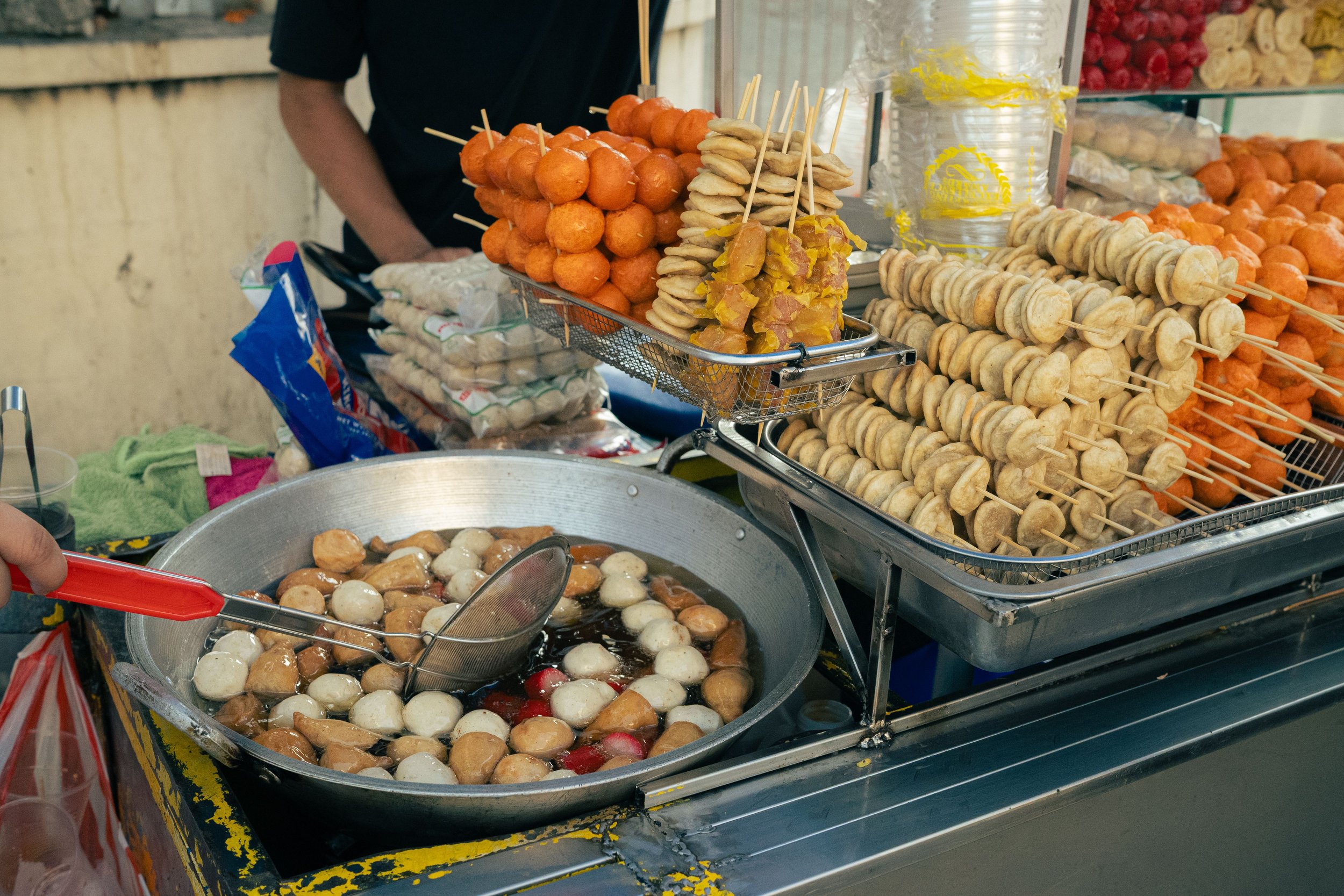
Filipino street food for tourists makes a perfect first taste of the Philippines. You'll find grills, carts, and vendors on almost every corner. Most sticks and cups cost a few pesos. Locals eat these snacks from morning until midnight. This Filipino street food guide covers every popular bite in one place.
You'll see familiar snacks like fries and burgers. You'll also meet bolder picks like isaw, betamax, and balut. Each entry explains what the food is. The FAQs answer the questions tourists ask most. Grab some cash and an empty stomach for your Manila street food trip.
Disclaimer: I live in Metro Manila. My list leans toward the best street food in Manila. My knowledge of regional street food is limited. I'd love to learn about the street food in your area. Share your local favorites in the comments.
Inihaw (Grilled Filipino Street Food)
Pork BBQ
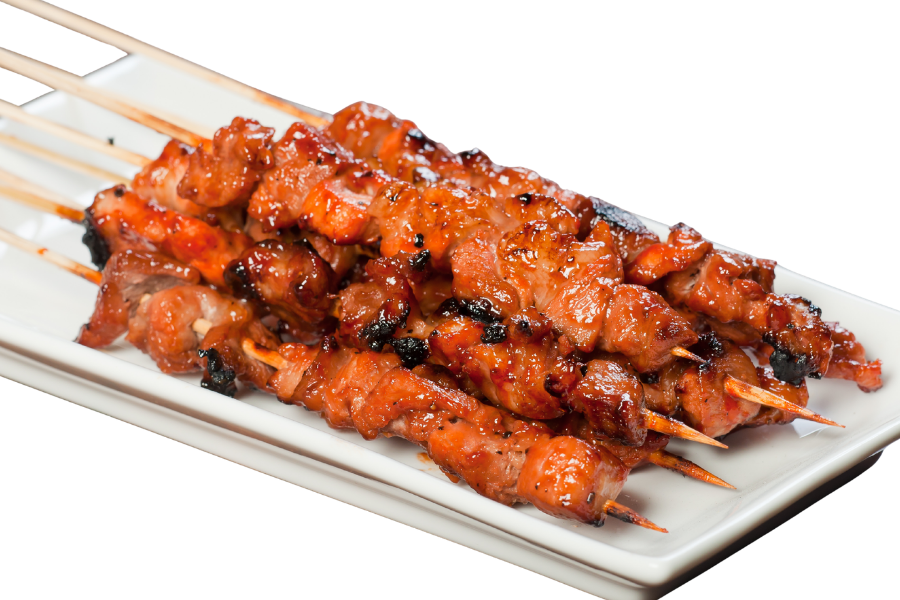
Pork BBQ is the most popular Filipino street food on a stick. Vendors marinate thin pork slices in soy sauce, banana ketchup, and sugar. The meat turns sticky and lightly charred on the grill. You'll love it with a cup of rice.
What is Filipino pork BBQ? Filipino pork BBQ is sweet grilled pork on a bamboo skewer.
What sauce comes with pork BBQ? Most stalls offer spiced vinegar with onions and chili.
Inihaw na Manok: Grilled Chicken
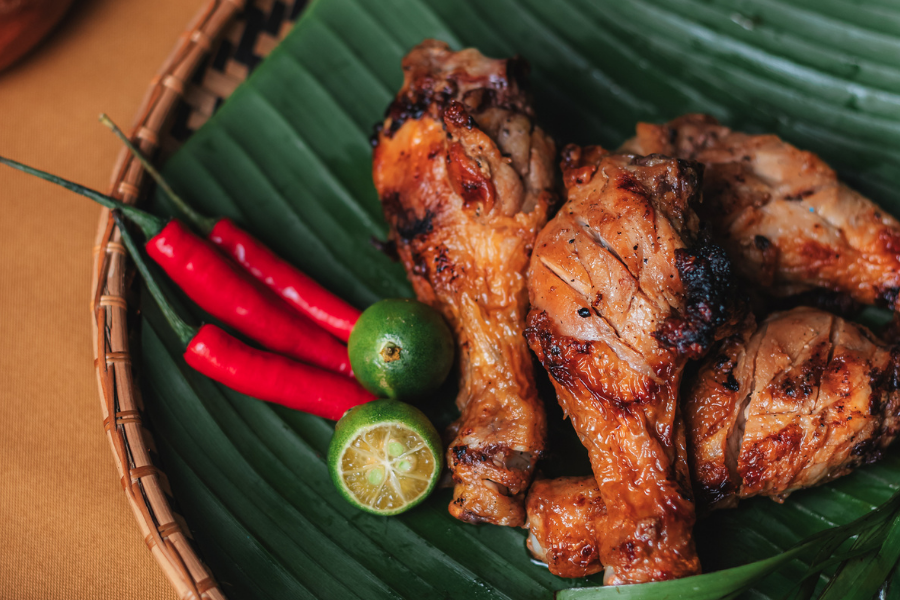
Inihaw na manok is grilled chicken with a sweet and savory glaze. Stalls sell legs, wings, and thighs on long skewers. The skin gets crispy over charcoal. Pair it with garlic rice and atchara.
What is inihaw na manok? Inihaw na manok means grilled chicken in Filipino.
Inihaw na Isda: Grilled Fish
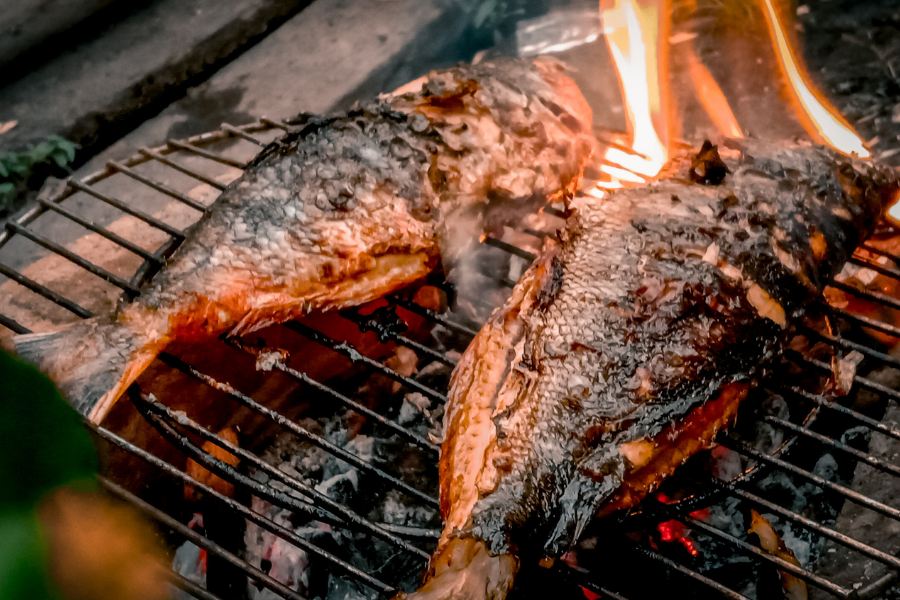
Grill stalls sell bangus, tilapia, and hito. Bangus is milkfish. Hito is catfish. Cooks serve the fish plain or pinaputukan style.
What is pinaputukan? Pinaputukan is fish or squid stuffed with tomatoes and onions. The cook wraps it in foil before grilling.
Which grilled fish suits first timers? Tilapia has a mild flavor. Bangus has more bones.
Inihaw na Tuna: Tuna Panga and Tuna Belly
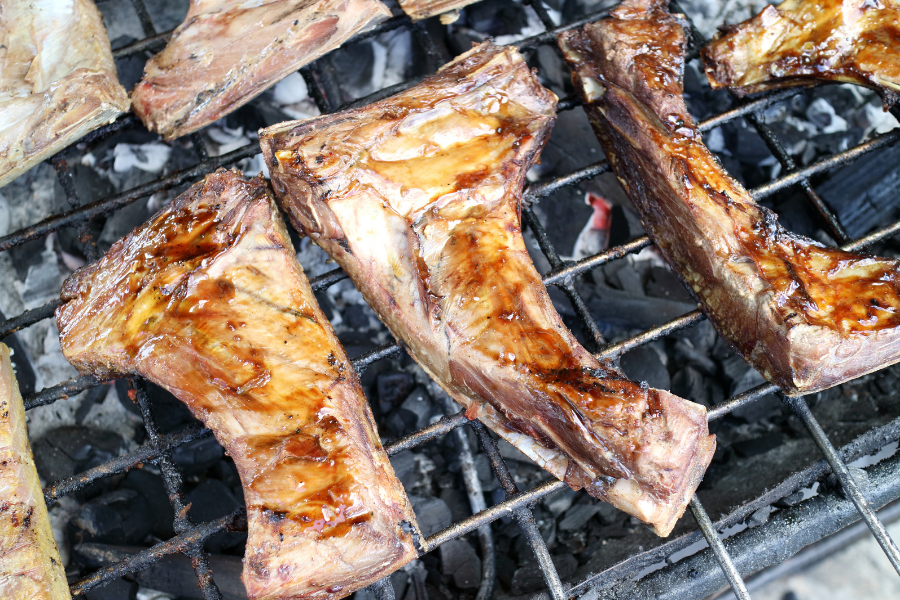
Tuna panga is grilled tuna jaw. Tuna belly is the fattier cut. Both cuts soak in a soy and calamansi marinade. You'll want extra rice for this one.
What is tuna panga? Tuna panga is the jaw of the tuna. The meat near the bone stays juicy after grilling.
Inihaw na Pusit: Grilled Squid
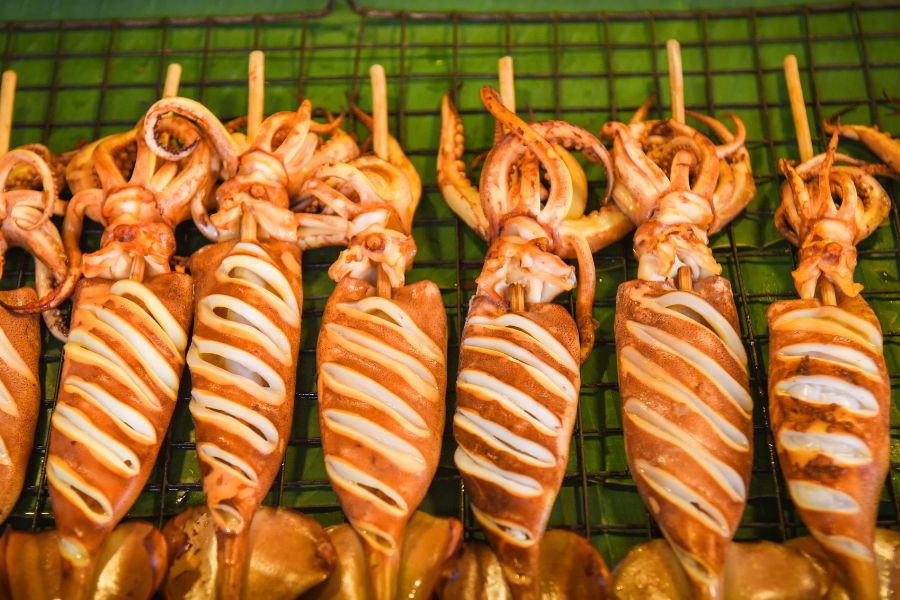
Grilled squid is a favorite at seaside and roadside grills. Cooks serve it plain or pinaputukan style. The stuffed version holds tomatoes and onions inside. Dip it in soy sauce with calamansi.
Is grilled squid chewy? Fresh squid stays tender on a hot grill. Overcooked squid turns rubbery.
Inihaw na Isaw
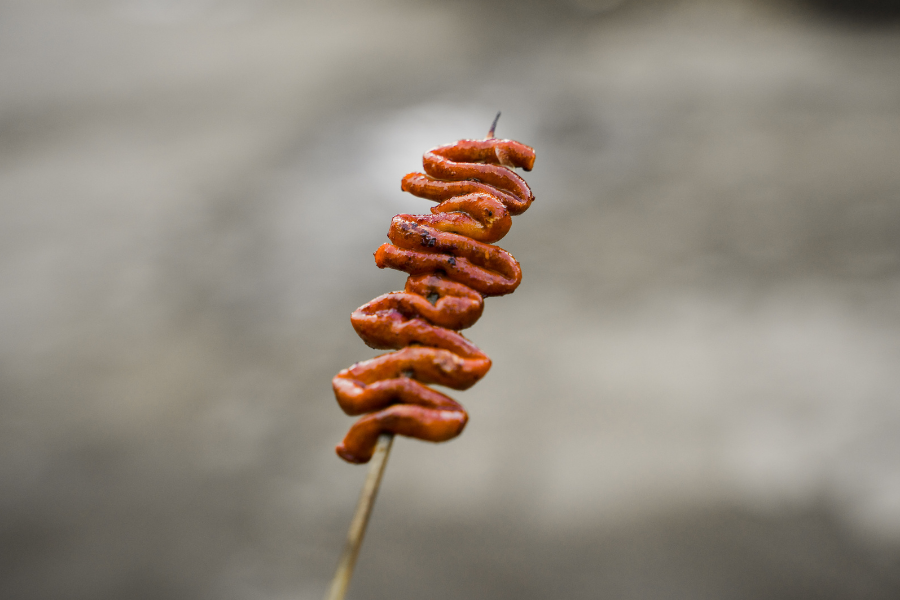
Isaw is the king of Pinoy street food grills. It belongs on every list of foods to try in Manila. You'll spot the coiled skewers at almost every barbecue stand. Dip each stick in spicy vinegar.
What is isaw? Isaw is grilled chicken or pork intestine on a stick.
What is Filipino isaw made of? Isaw uses cleaned intestines from chickens or pigs. Vendors marinate them in a sweet barbecue sauce.
Is isaw chicken or pork? Isaw manok comes from chicken. Isaw baboy comes from pork. Chicken isaw is more common.
How is isaw cooked? Vendors boil the intestines first. They grill the skewers over charcoal next. The cook bastes each stick with sauce.
Where to try isaw in the Philippines? The isaw stalls near UP Diliman in Quezon City draw long lines. Most neighborhood barbecue stands sell isaw at night.
Inihaw na Tumbong
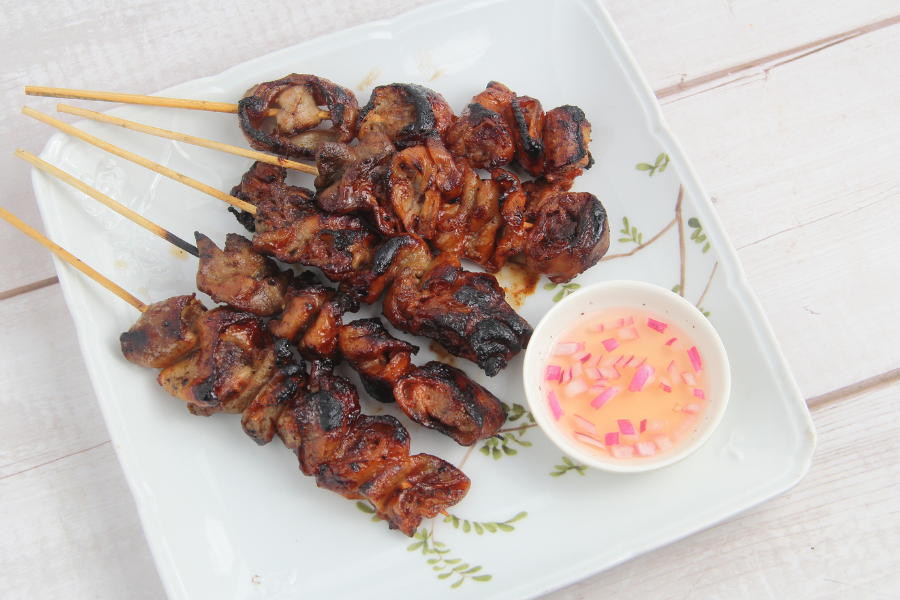
Tumbong is grilled pork intestine from the last section of the gut. It has a thicker, chewier bite than isaw. Vendors marinate it in barbecue sauce. Adventurous eaters love it.
What is tumbong? Tumbong is the end part of the pig's large intestine.
Inihaw na Bulaklak
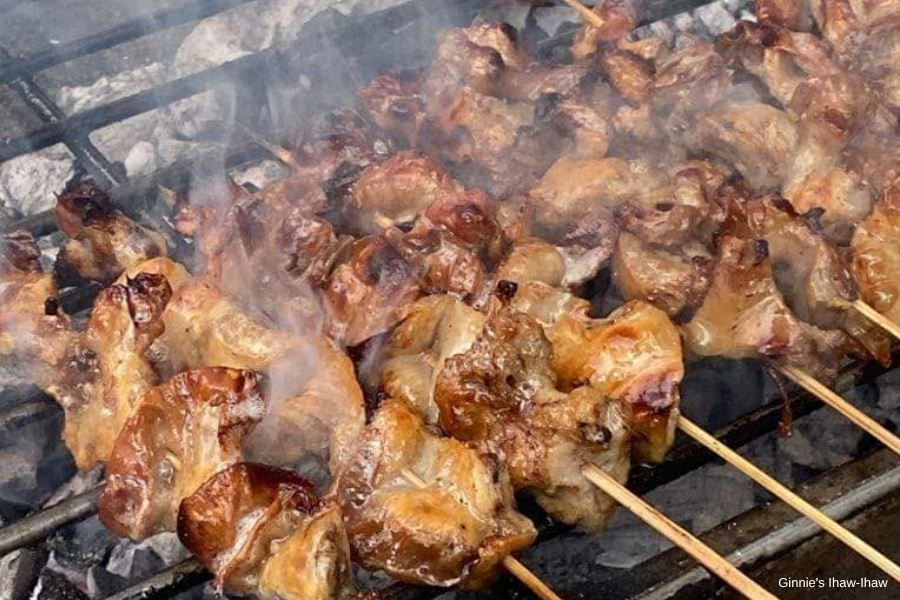
Bulaklak means "flower" in Filipino. The name refers to the ruffled shape of pork mesentery. Grilled bulaklak turns crisp at the edges. You'll find it at the same stalls as isaw.
What is bulaklak made of? Bulaklak is pork mesentery. This fatty membrane holds the pig's intestines in place.
Inihaw na Betamax
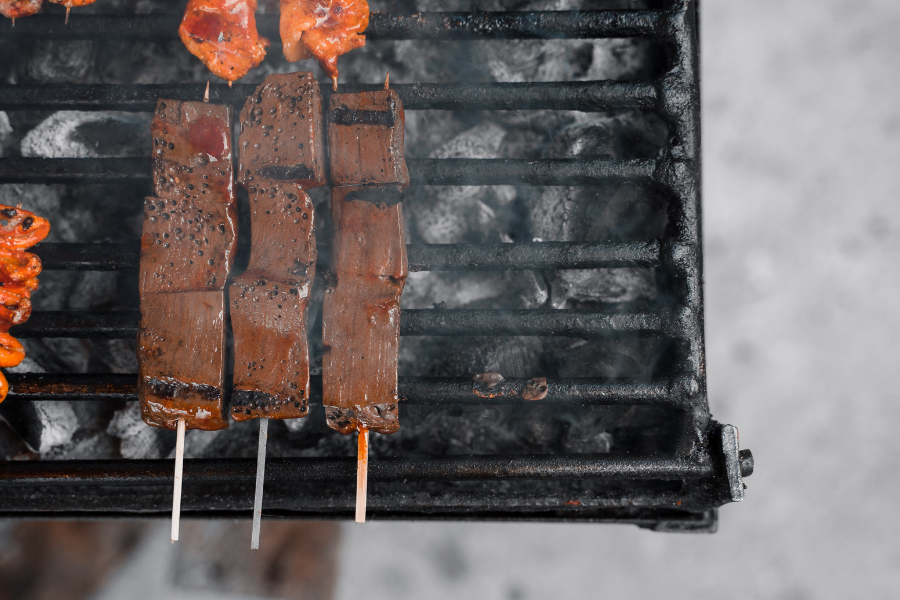
Betamax is grilled cubes of coagulated blood. Locals named it after the old Betamax video tape. The cubes look like tiny tapes on a stick. The texture feels soft and a bit like tofu.
What is betamax made of? Vendors use chicken or pork blood. The blood sets into firm blocks before grilling.
What does betamax taste like? Betamax tastes mild and earthy. The barbecue glaze adds sweetness.
Inihaw na Adidas: Chicken Feet
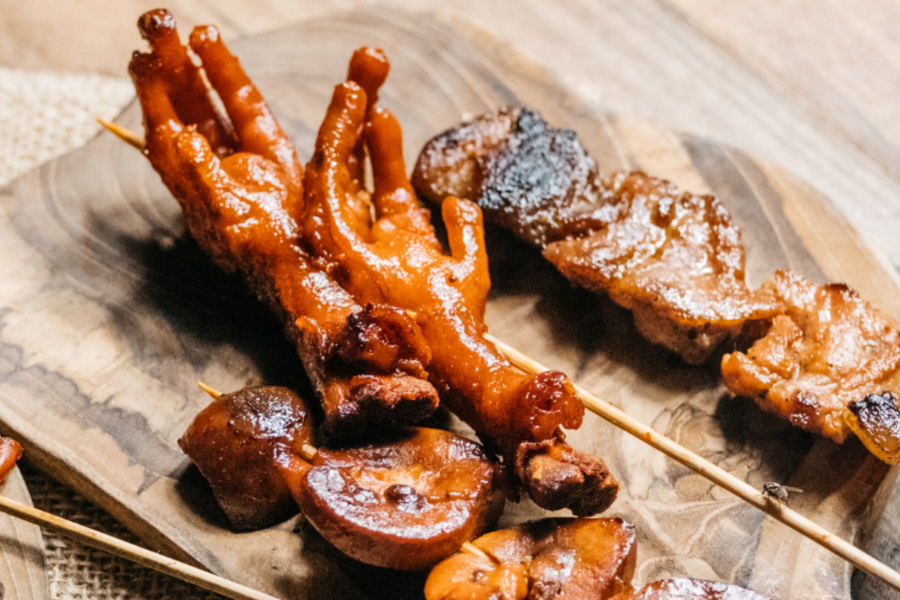
Adidas is grilled chicken feet. The name is a playful nod to the sportswear brand. You'll nibble the skin and cartilage around the bones. The sauce carries most of the flavor.
What is adidas street food? Adidas is the Filipino nickname for grilled chicken feet.
Inihaw na Helmet: Ulo ng Manok
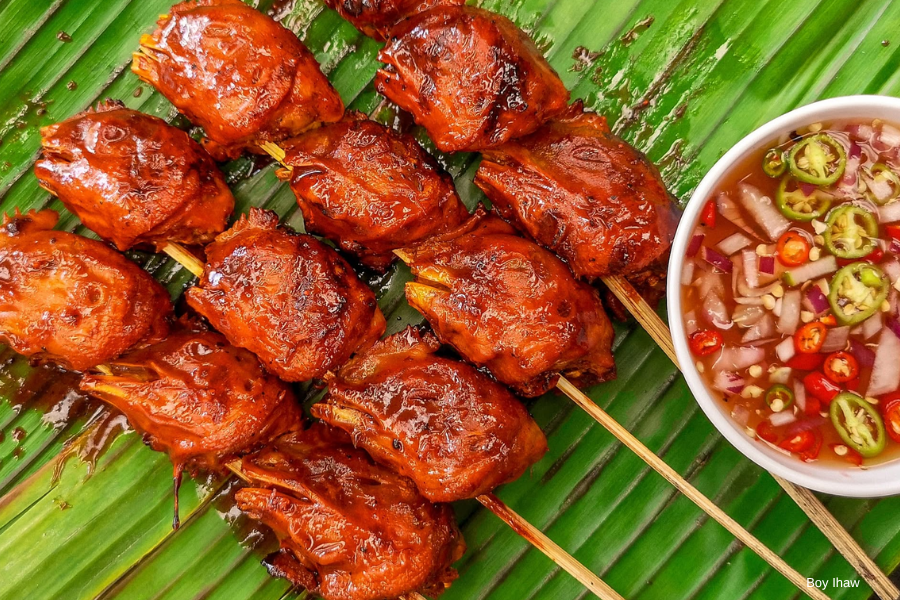
Helmet is grilled chicken head. Ulo ng manok is the Filipino name. The nickname comes from its round shape. Many locals crunch through the whole thing.
Can you eat the whole chicken head? Most locals eat the skin, the comb, and the brain. Some people remove the beak.
Inihaw na Leeg ng Manok: Chicken Neck
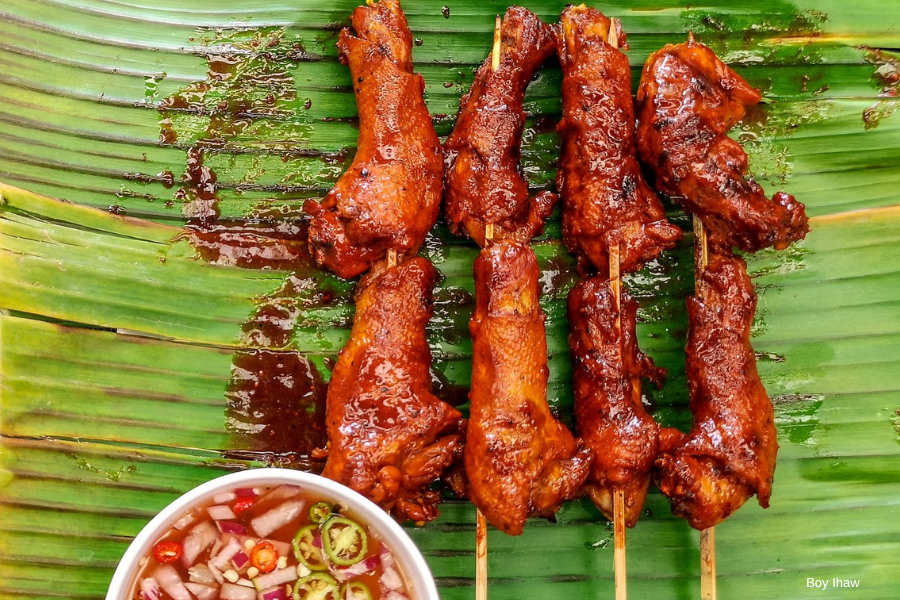
Leeg ng manok is grilled chicken neck. Each skewer holds small bits of meat between the bones. The skin soaks up plenty of sauce. It's a cheap and filling pick.
What is leeg ng manok? Leeg ng manok means chicken neck in Filipino.
Inihaw na Walkman: Tenga ng Baboy
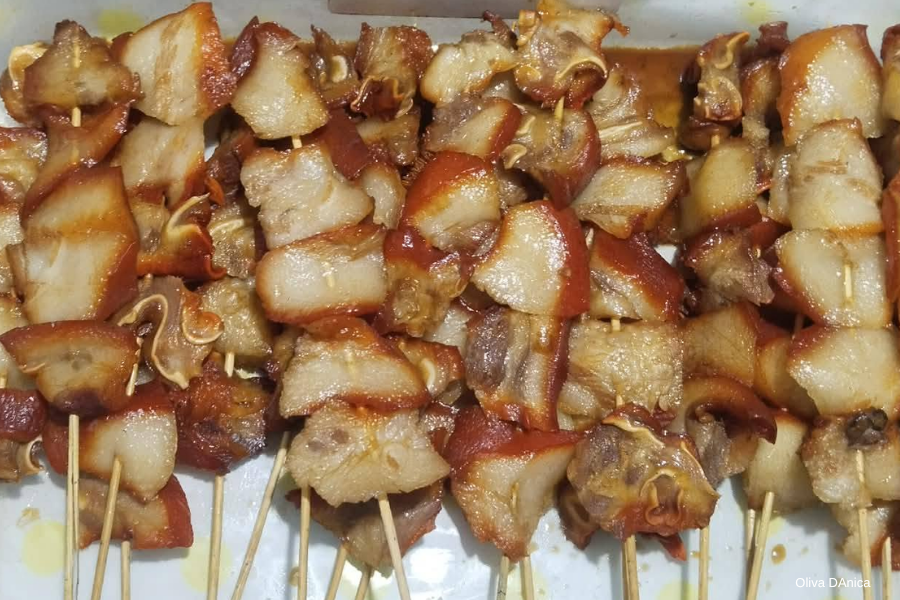
Tenga ng baboy is grilled pork ear. Locals call it walkman after the old cassette player. The ear has a crunchy cartilage center. The skin turns sticky on the grill.
Why is it called walkman? Pork ears sit on the sides of the head. They look like the headphones of a Walkman.
Inihaw na Hotdog
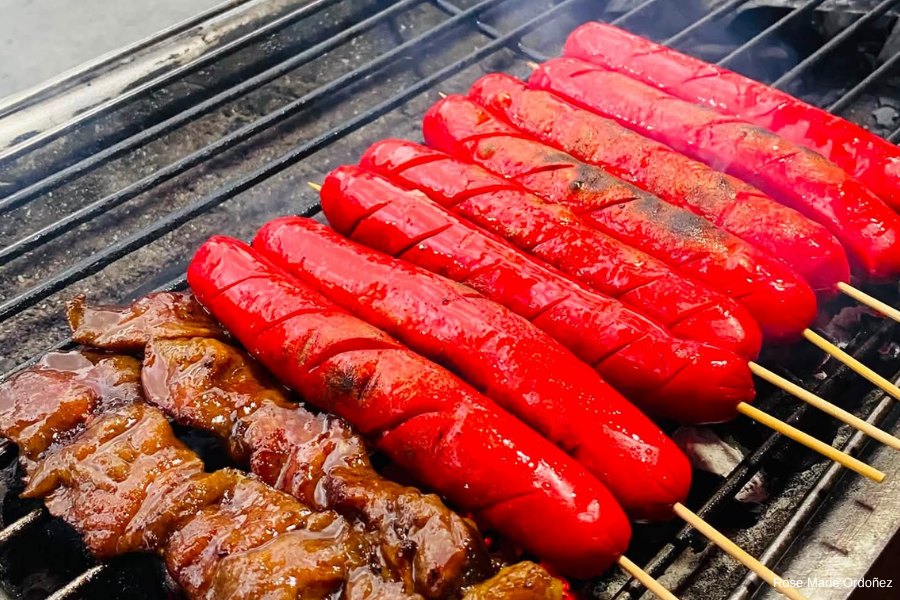
Red Filipino hotdogs get their own spot on the grill. Vendors cut slits on the sides for extra char. Kids and adults both love this sweet skewer. It's a safe choice for picky eaters.
Why are Filipino hotdogs red? Local brands add red food coloring. The color makes them stand out.
Inihaw na Atay
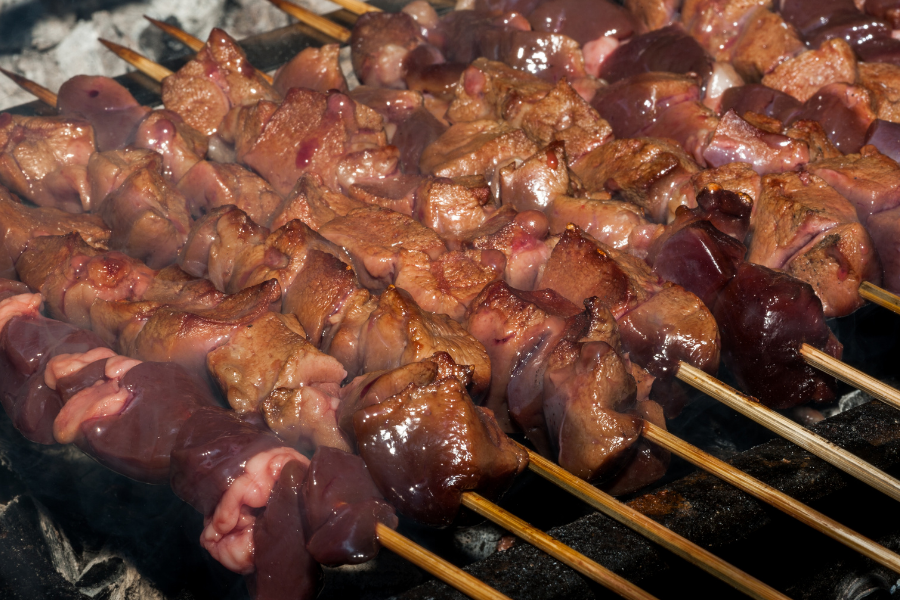
Atay means liver in Filipino. Stalls grill chicken or pork liver on sticks. The inside stays soft and creamy. Liver fans will enjoy this one.
Is grilled atay chicken or pork? Most stalls sell chicken atay. Some stalls sell pork atay too.
Inihaw na Balunbalunan
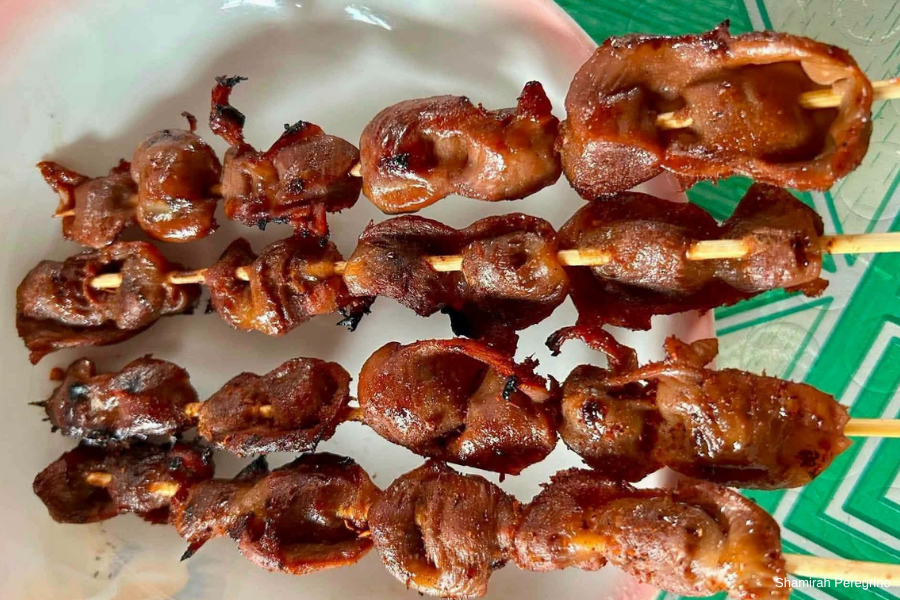
Balunbalunan is grilled chicken gizzard. The meat has a firm, chewy texture. Vendors boil it before grilling. You'll find it next to isaw and atay.
What is balunbalunan? Balunbalunan is the chicken's gizzard. This muscle helps the bird grind its food.
Inihaw na Corazon: Chicken Heart
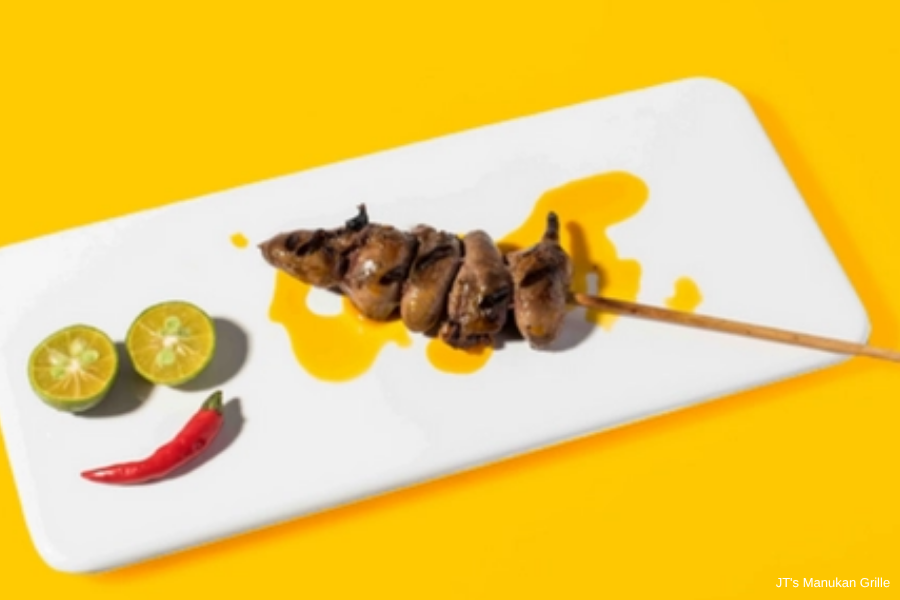
Corazon is grilled chicken heart. The name comes from the Spanish word for heart. Fewer stalls carry it. Grab a stick when you see it.
What does corazon taste like? Chicken heart tastes meaty and a little like liver. The texture is firmer.
Inihaw na Pwet ng Manok: Chicken Butt
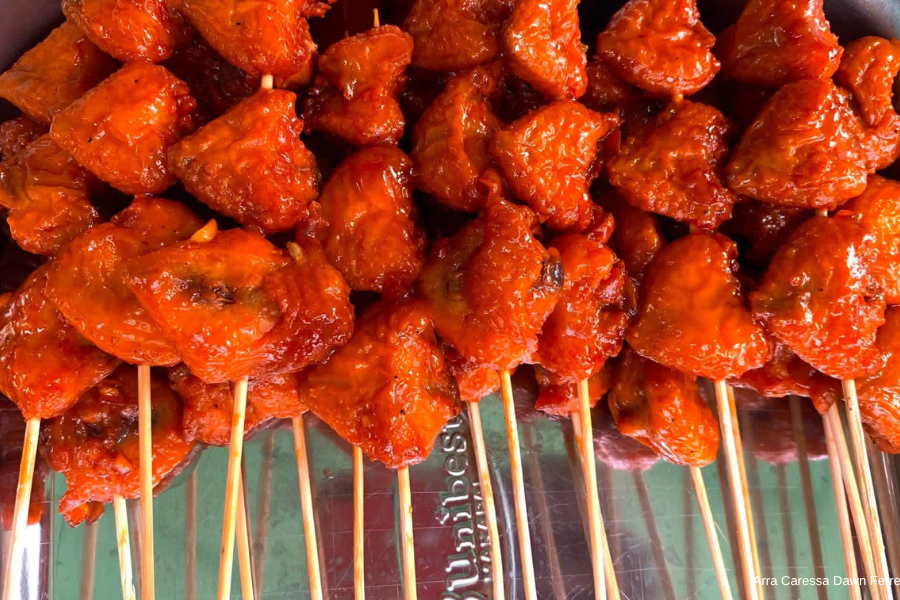
Pwet is the grilled tail end of the chicken. The fatty meat melts on the grill. Many locals call it the tastiest part. Curious eaters should try it.
What part of the chicken is pwet? Pwet is the chicken's tail. Some people call it the pope's nose.
Inihaw na Dried Squid
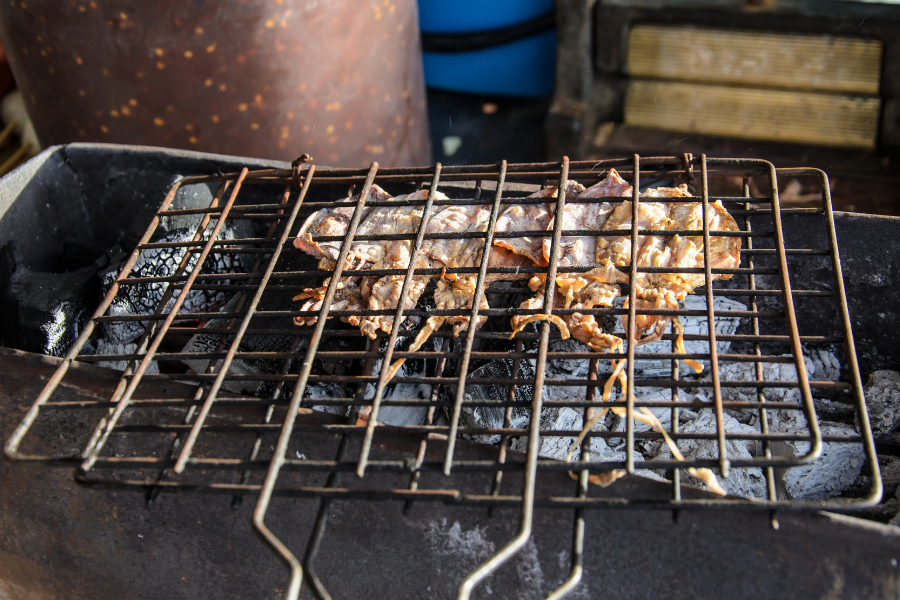
Dried squid gets a quick toast over hot coals. The heat makes it smoky and chewy. Vendors tear it into strips. Locals pair it with spiced vinegar and cold beer.
What is dried squid called in the Philippines? Locals call it pinatuyong pusit.
Prito (Fried Filipino Street Food)
Fish Balls, Squid Balls, and Chicken Balls
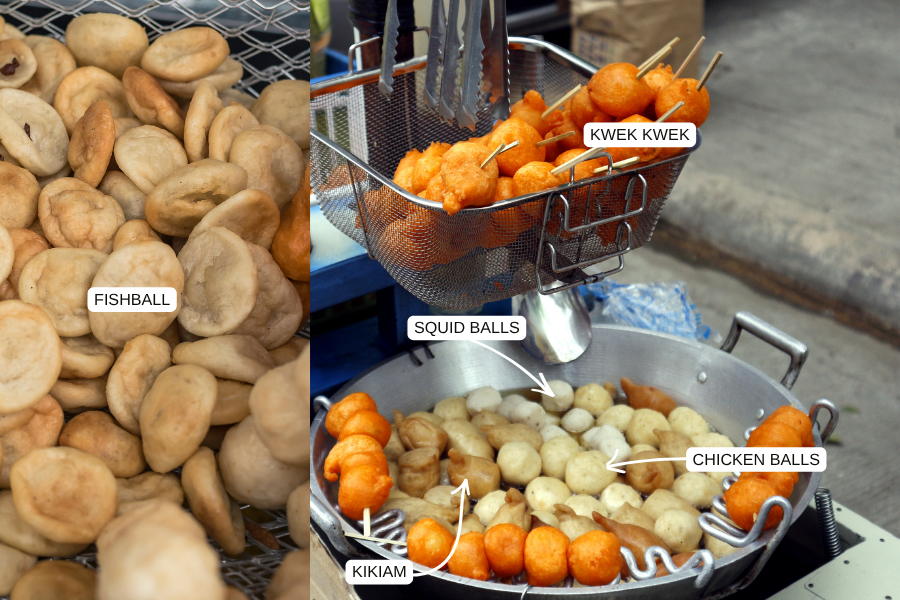
Fish balls are the best Filipino street food for a first try. Vendors fry them in a big wok on a cart. You'll skewer your own balls with a bamboo stick. Pick a sauce from the jars on the cart.
What is fish ball in the Philippines? Filipino fish balls are flat, round snacks made from fish paste and flour.
What sauces come with fish balls? Carts offer a sweet brown sauce, a spicy sauce, and vinegar.
How do you use the sauce jars? Many carts now give small cups for sauce. Use the cup to keep things clean.
Kikiam
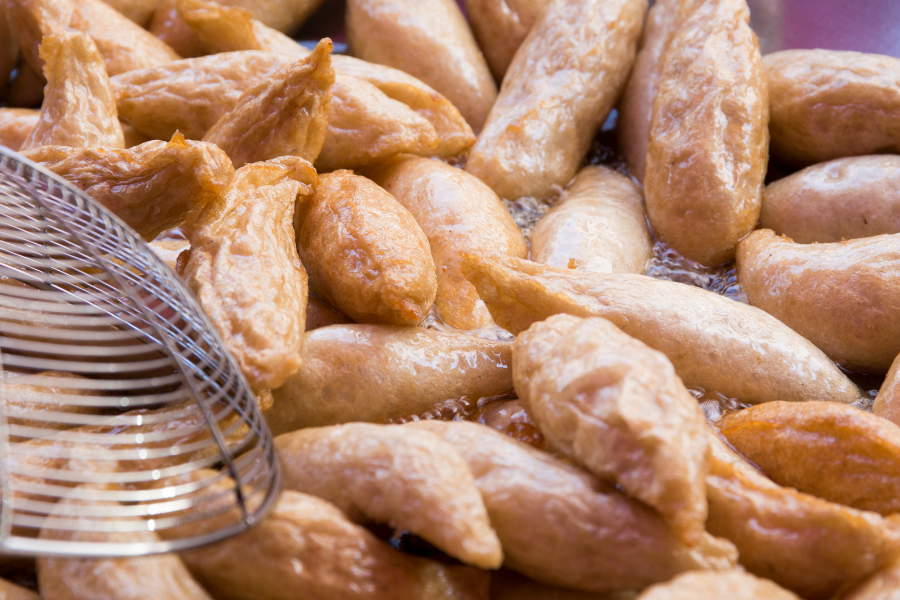
Kikiam is a fried roll of ground meat or fish paste. Street carts sell a cheaper version made from fish and flour. It sits next to fish balls in the wok. Dip it in the same sweet sauce.
What is kikiam made of? Street kikiam uses fish paste, flour, and seasonings. Traditional kikiam uses pork wrapped in bean curd sheet.
Kwek-Kwek
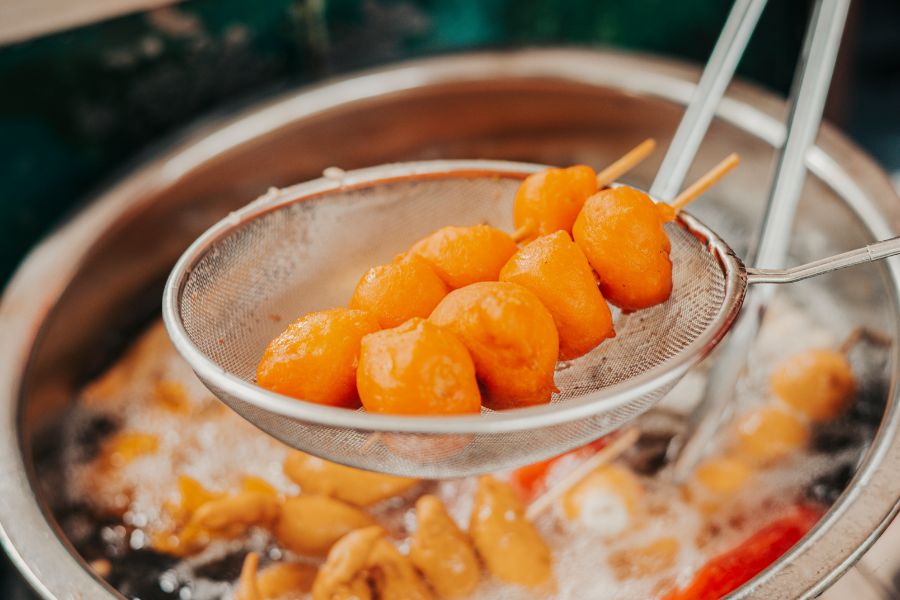
Kwek-kwek is a popular Filipino street food snack. Vendors dip boiled quail eggs in orange batter. The eggs come out crispy and bright. You'll spot the orange pile from far away.
What is kwek-kwek? Kwek-kwek is deep-fried quail eggs in orange batter.
What is the difference between kwek-kwek and tokneneng? Kwek-kwek uses small quail eggs. Tokneneng uses bigger chicken or duck eggs. Both use the same orange batter.
What sauce goes with kwek-kwek? Most people dip it in spiced vinegar with cucumber and onion. Some prefer the sweet fish ball sauce.
Tokneneng
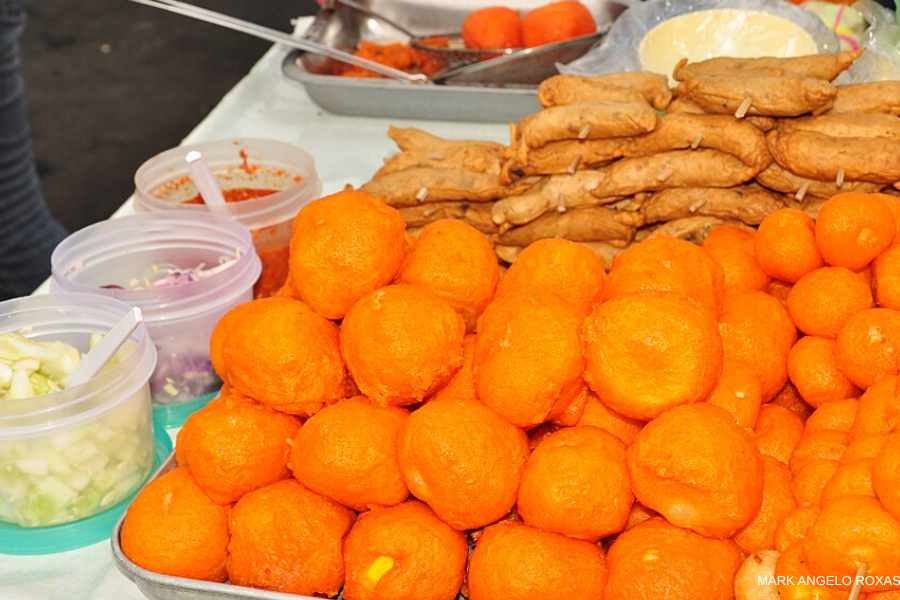
Tokneneng is the bigger cousin of kwek-kwek. Vendors coat whole boiled chicken or duck eggs in orange batter. One piece feels like a small meal. Slice it open and pour vinegar inside.
Why is tokneneng orange? Annatto or food coloring gives the batter its color.
Proben
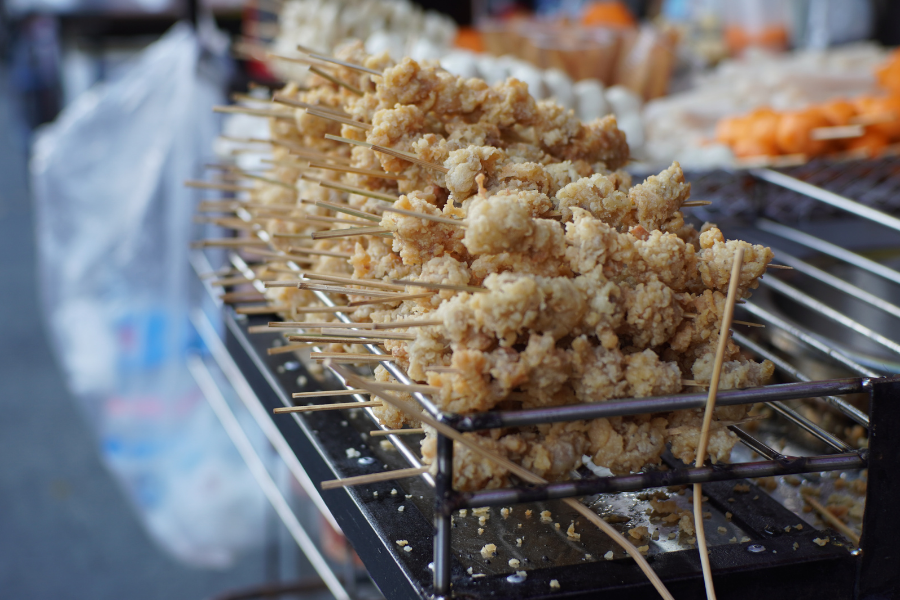
Proben is breaded and fried chicken proventriculus. This part sits before the gizzard. The coating turns crunchy in hot oil. Vinegar cuts through the richness.
What is proben? Proben is part of the chicken's digestive system. Vendors bread it and fry it.
Calamares
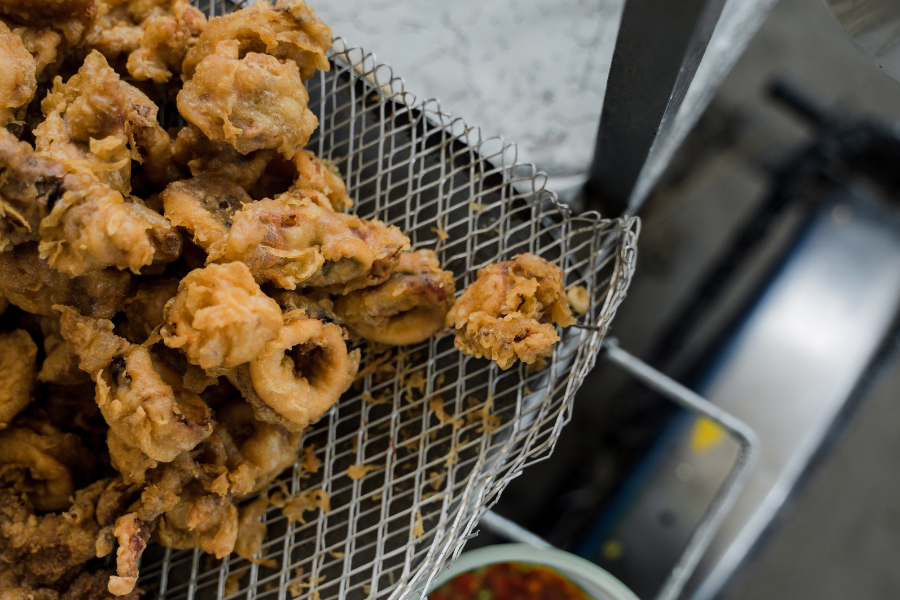
Calamares are battered squid rings. Street stalls fry them in big batches. You'll get a paper cup full of crunchy rings. Garlic mayo or vinegar makes a good dip.
What is calamares? Calamares is the Filipino version of fried calamari.
Chicken Skin
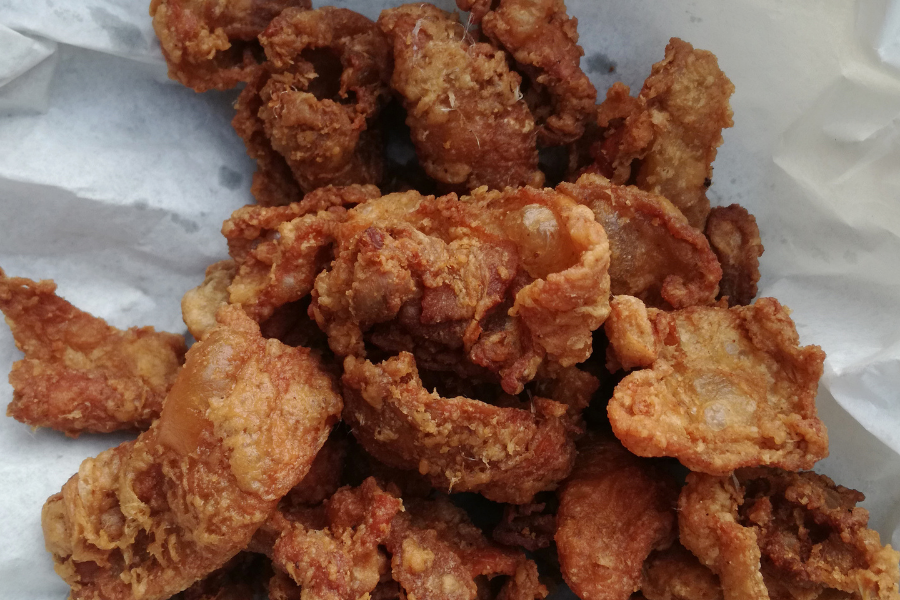
Fried chicken skin is a salty, crispy snack. Stalls sell it by the cup or the bag. It pairs well with spicy vinegar. Share a cup with friends.
How is chicken skin cooked? Vendors coat the skin in seasoned flour. They deep-fry it until crisp.
Pritong Isaw
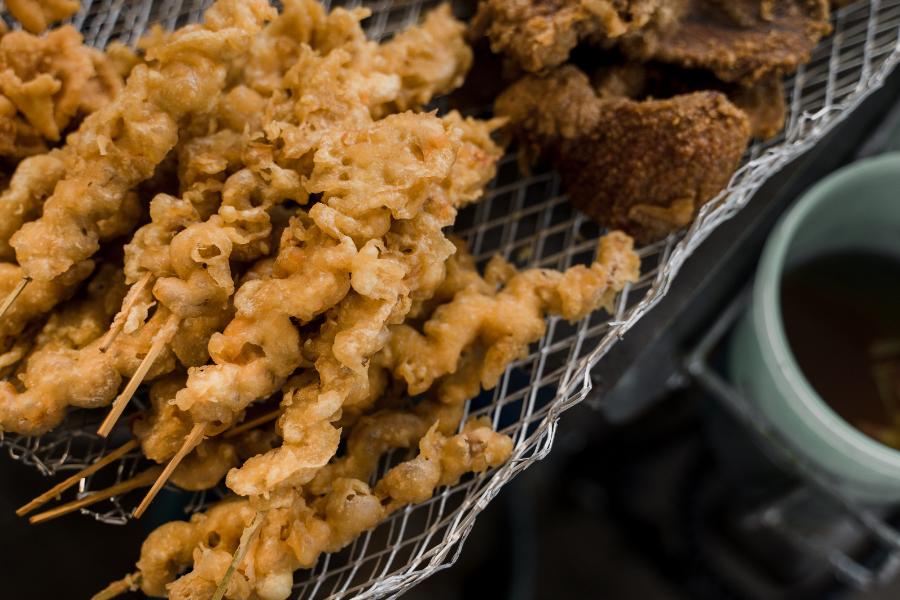
Some stalls fry chicken isaw instead of grilling it. The coating turns golden and crunchy. It tastes a bit like chicharon. Vinegar is the best partner here.
Is fried isaw the same as chicharon bituka? Both use intestines. Fried isaw keeps a chewy center. Chicharon bituka stays crunchy all the way through.
Pritong Atay
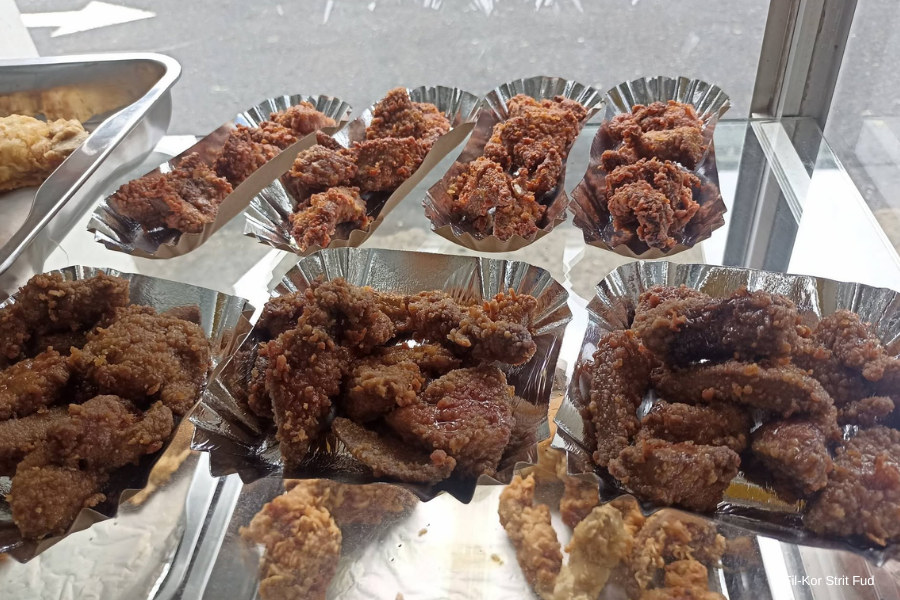
Pritong atay is fried chicken liver. Vendors bread it before frying. The outside turns crisp. The inside stays soft.
One-Day-Old Chicken
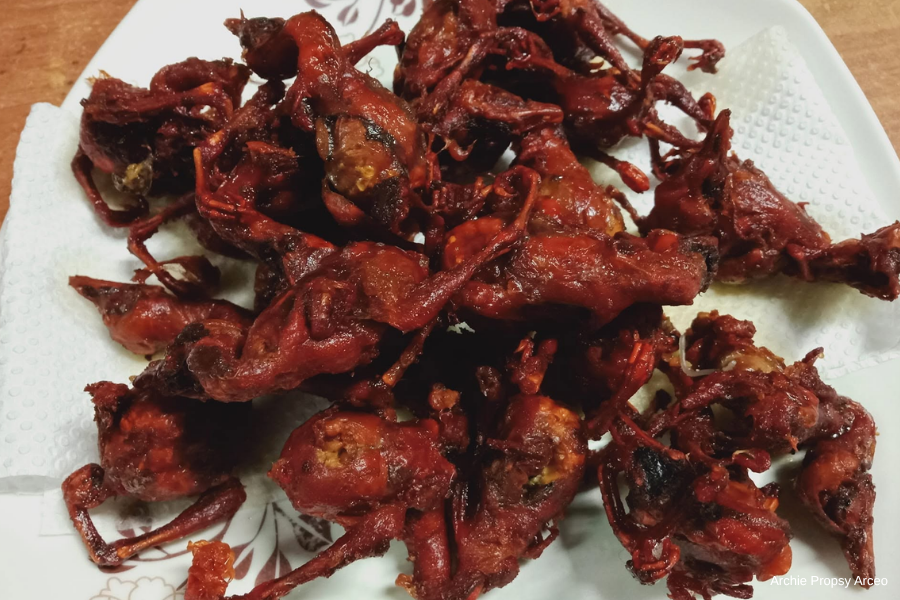
One-day-old chicken is deep-fried young chick. Hatcheries sell extra male chicks to vendors. Vendors season and fry them whole. The whole chick turns crunchy.
Is one-day-old chicken a real chick? Yes. The name describes the age of the chick.
Fried Chicken
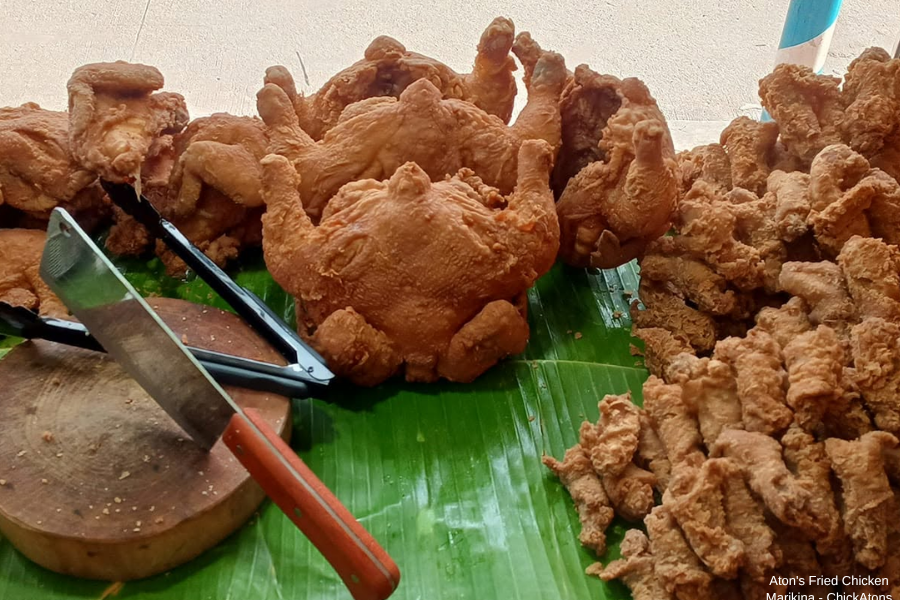
Street fried chicken is cheap, crispy, and everywhere. Carts sell it by the piece with rice. The skin gets extra seasoning. Ketchup or gravy comes on the side.
Why try street fried chicken? Neighborhood carts charge less than big chains. The portions still fill you up.
Okoy
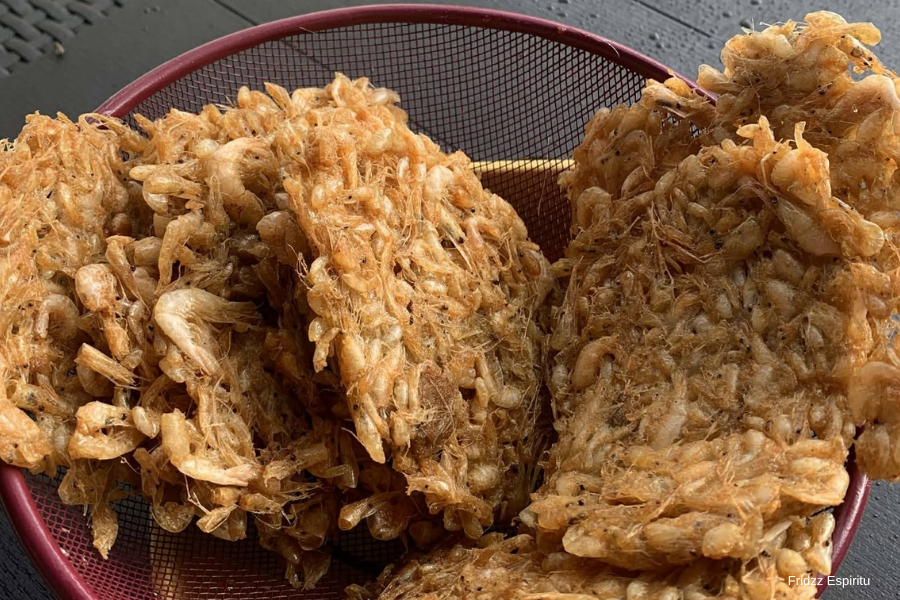
Okoy is a crispy fritter with small shrimp and vegetables. Cooks use bean sprouts or grated squash. The edges turn lacy and golden. Dip it in vinegar with garlic.
What is okoy made of? Okoy uses small shrimp, flour, and vegetables.
Lumpia Toge
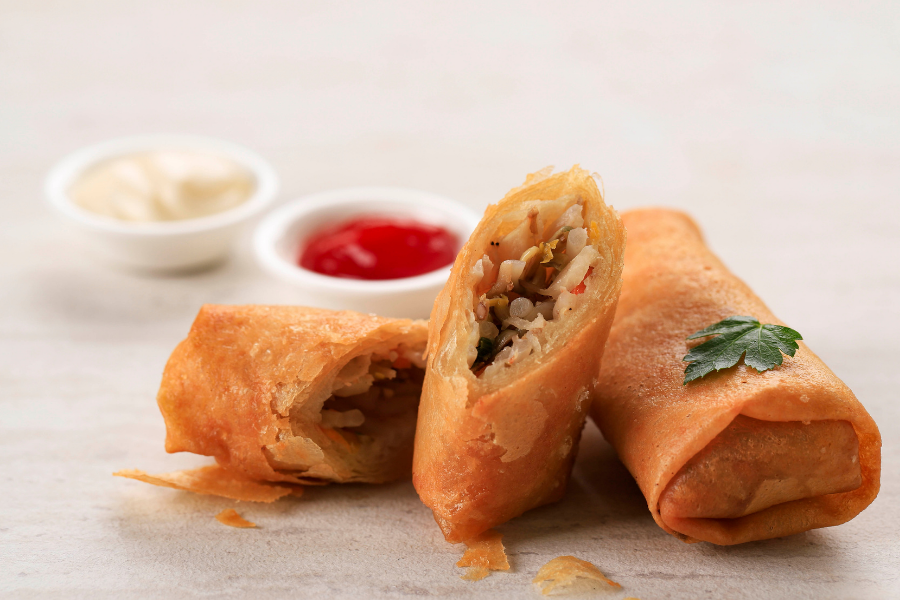
Lumpia toge is a fried spring roll with bean sprouts. Some versions add tofu and carrots. The wrapper turns crunchy in hot oil. It comes with spiced vinegar.
Lumpia Shanghai
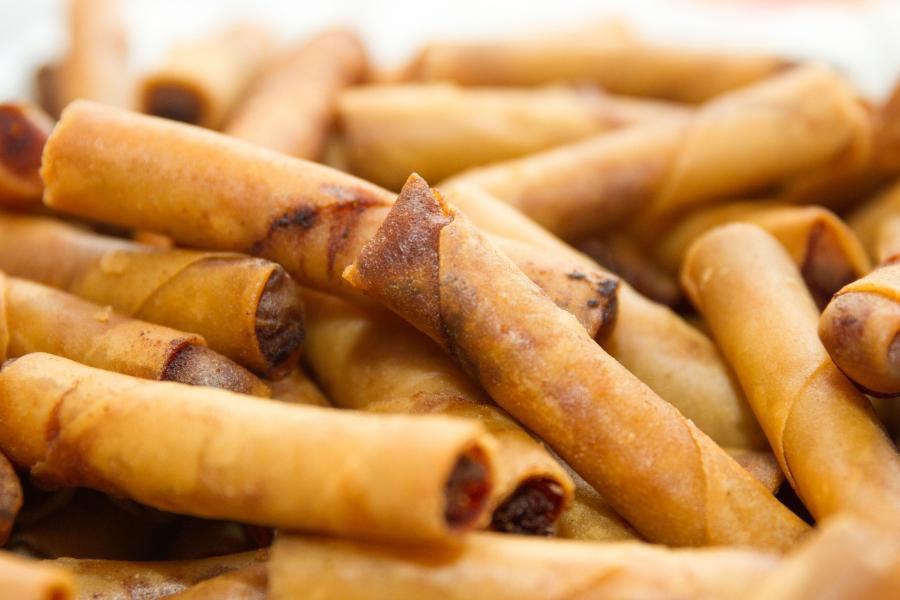
Lumpia Shanghai is a thin fried spring roll with ground pork. Every Filipino party serves it. Street stalls sell it by the stick or the cup. Sweet chili sauce makes it even better.
What is the difference between lumpia Shanghai and lumpia toge? Lumpia Shanghai has ground meat. Lumpia toge has bean sprouts.
Dynamite
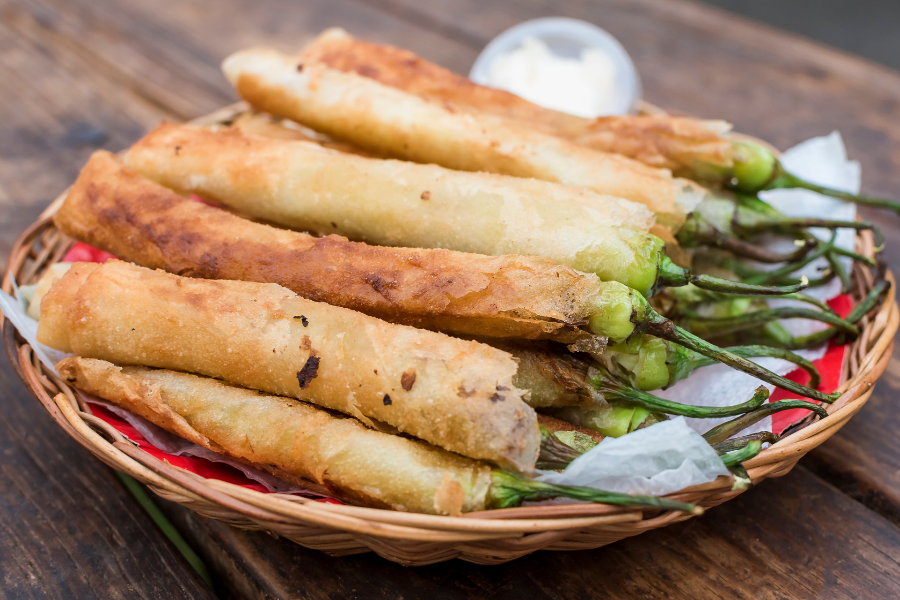
Dynamite is a long green chili stuffed with cheese. The cook wraps it in lumpia wrapper. The chili turns crispy in hot oil. Some versions add ground meat.
Is dynamite spicy? The green chili is mild. The seeds add some heat.
Cheese Sticks
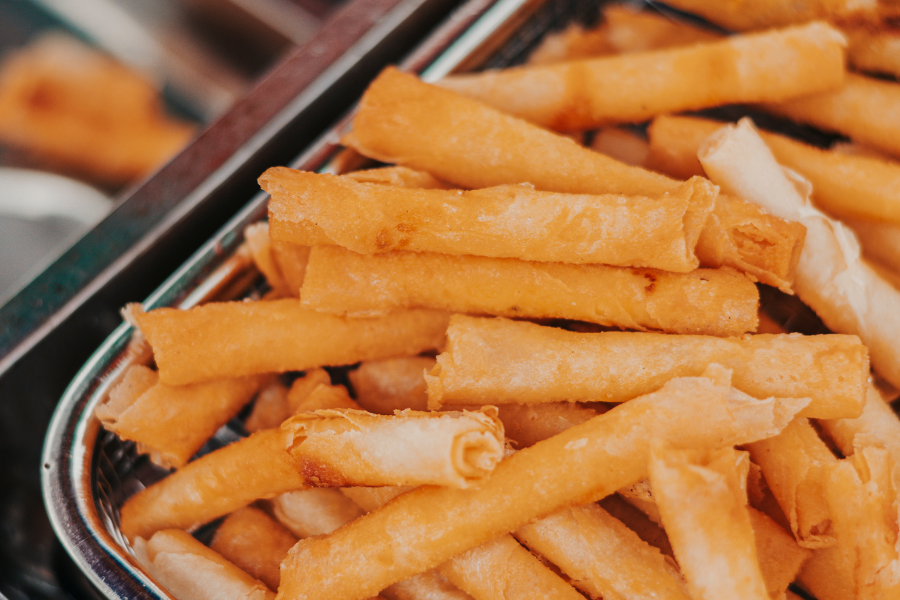
Cheese sticks are strips of cheese in a lumpia wrapper. Vendors fry them until golden. The cheese melts inside. Kids love them after school.
What sauce goes with cheese sticks? Most stalls offer ketchup or mayo.
Chicharon and Crunchy Snacks
Chicharon Baboy
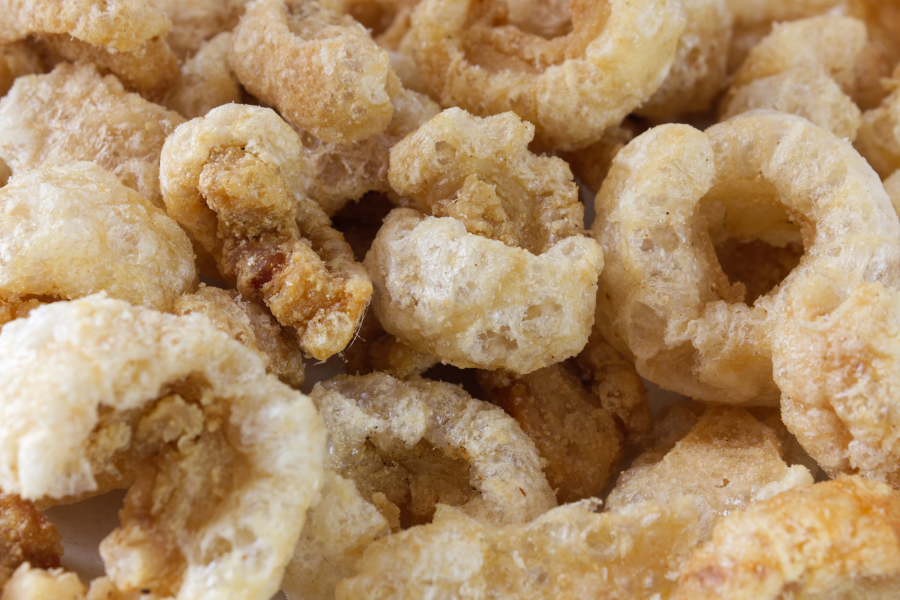
Chicharon baboy is deep-fried pork skin. You'll find it in many styles. Bilog is the round, puffy kind. Some versions keep a layer of meat or backfat.
What is chicharon with laman? Chicharon with laman has meat attached to the skin. It has a heavier, meatier crunch.
What are chicharon bits? Chicharon bits are small broken pieces. They work well as toppings for lugaw.
Chicharon Bulaklak
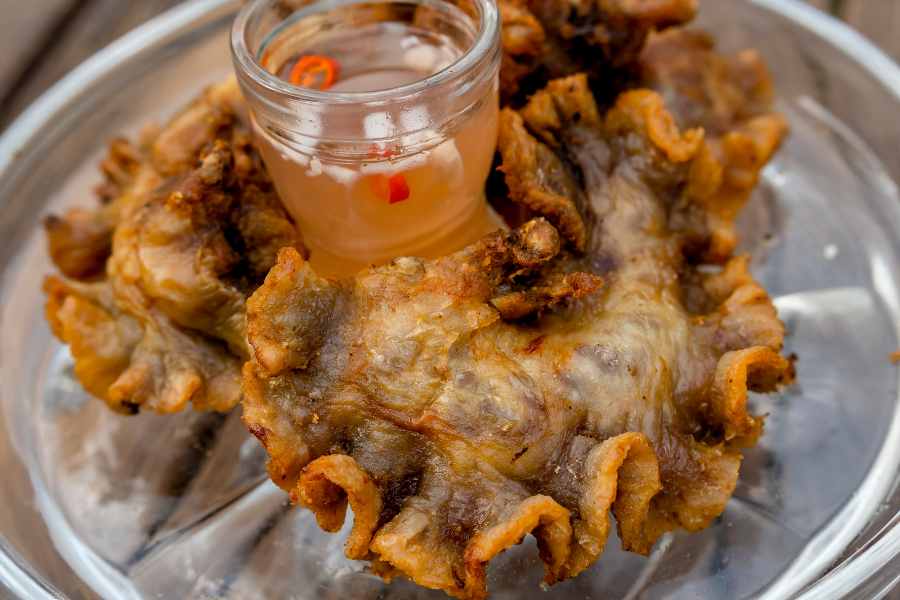
Chicharon bulaklak is deep-fried pork mesentery. The ruffles puff up like flower petals. It's rich and crunchy. Eat it with spicy vinegar.
Is chicharon bulaklak healthy? It's high in fat and cholesterol. Enjoy it in small portions.
Chicharon Bituka: Chibits
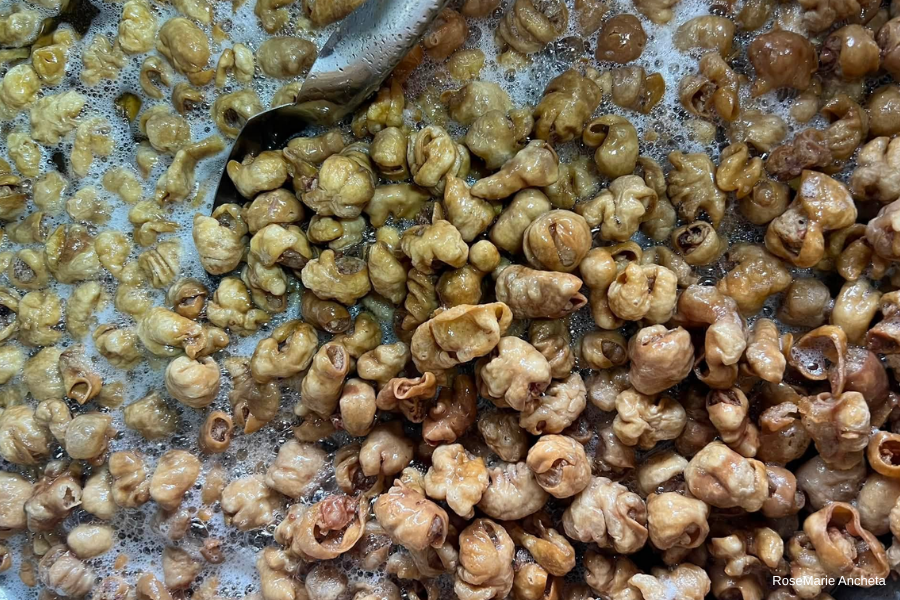
Chibits is deep-fried pork intestine. The name is short for chicharon bituka. Vendors sell it in small paper bags. The crunch is addictive.
Chicharon Taba ng Baka
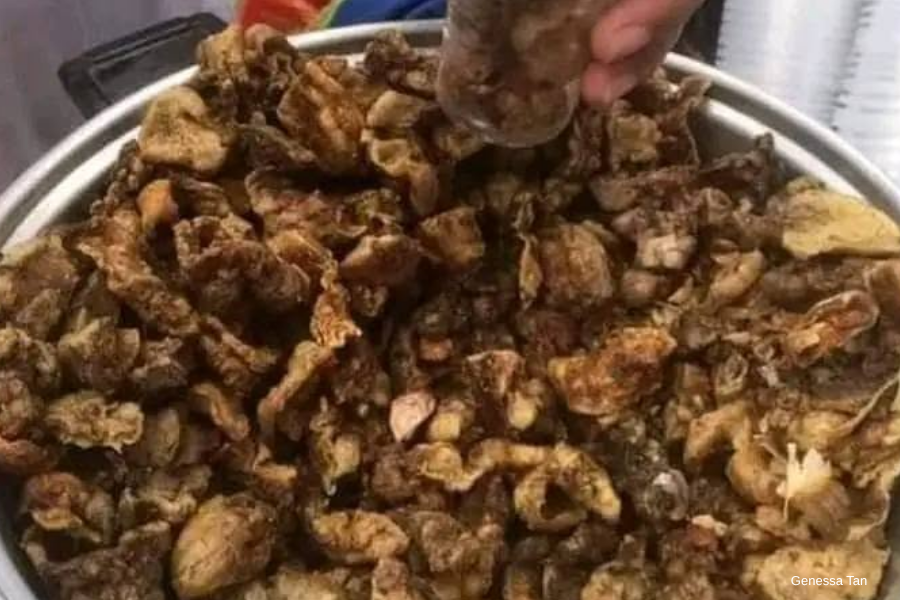
This chicharon comes from beef fat. It has a rich, buttery crunch. Fewer vendors sell it. Try it when you find it.
What is taba ng baka? Taba ng baka means beef fat in Filipino.
Mushroom Chicharon
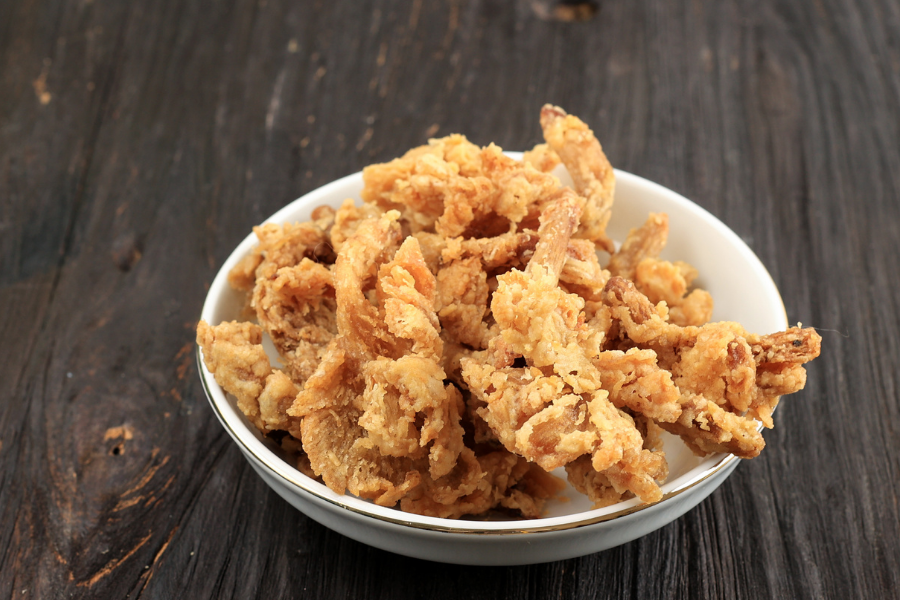
Mushroom chicharon is a lighter crunchy snack. Vendors fry battered vegetables or mushrooms. Oyster mushroom chicharon is the most popular version. Vegetarians will love this pick.
Is mushroom chicharon vegetarian? The mushrooms are plant-based. Ask the vendor about the batter and oil.
Kropek
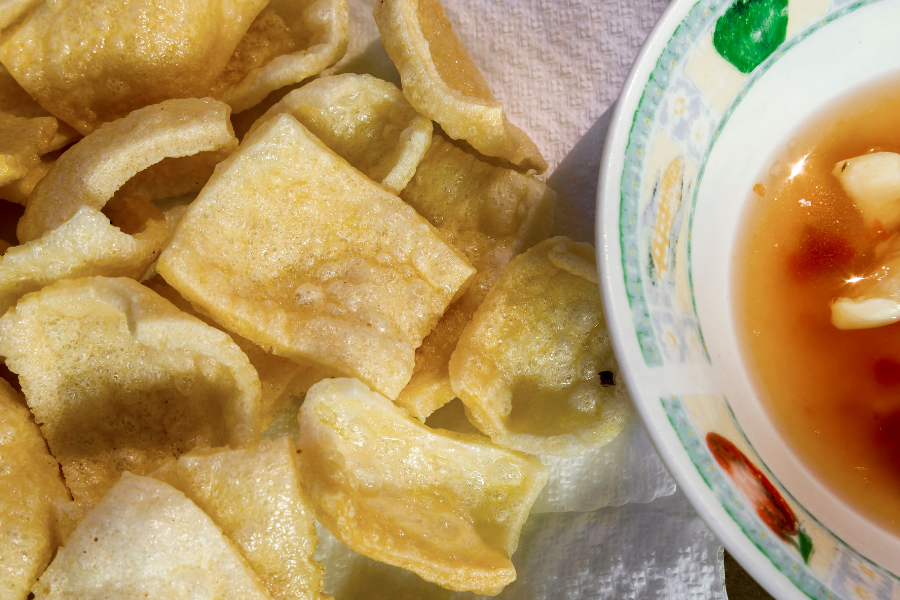
Kropek is a puffy cracker. Most versions use shrimp or fish. It pairs well with vinegar. Locals eat it with drinks.
What is kropek made of? Kropek uses starch mixed with shrimp or fish.
Adobong Mani
Adobong mani is fried peanuts with garlic and salt. Vendors sell it in paper cones and small bags. You'll see sellers on buses and in parks. It makes a perfect travel snack.
Is adobong mani related to adobo? Adobong mani shares the name only. The recipe uses fried garlic and salt.
Bicho-Bicho
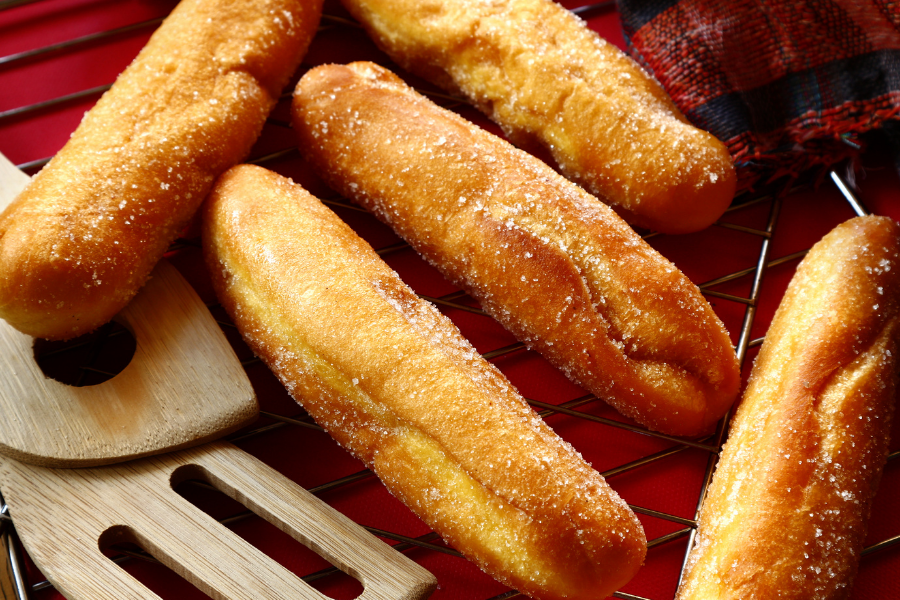
Bicho-bicho is a fried dough. Vendors roll it in sugar. It tastes chewy and sweet. Pair it with hot coffee.
What is bicho-bicho? Bicho-bicho is a Filipino doughnut. Some regions call it shakoy.
Hot Meals and Soups
Lugaw
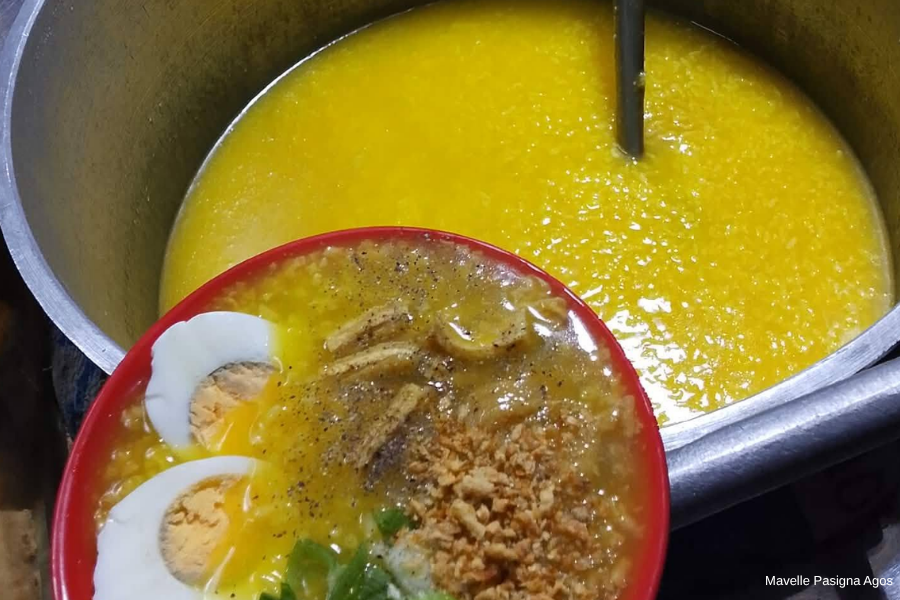
Lugaw is warm rice porridge. Stalls top it with boiled egg, innards, fried garlic, and scallions. It's the ultimate comfort food. Locals eat it for breakfast or late at night.
What is the difference between lugaw and goto? Lugaw is plain rice porridge. Goto includes beef tripe.
What toppings go with lugaw? Popular toppings include egg, tokwa, chicharon, and calamansi. Atay, puso, tito, and tuwalya are classic Filipino offal (lamang-loob) toppings commonly added to lugaw (rice porridge) or goto (beef tripe rice porridge) to add varying textures and rich, savory flavors.
Mami
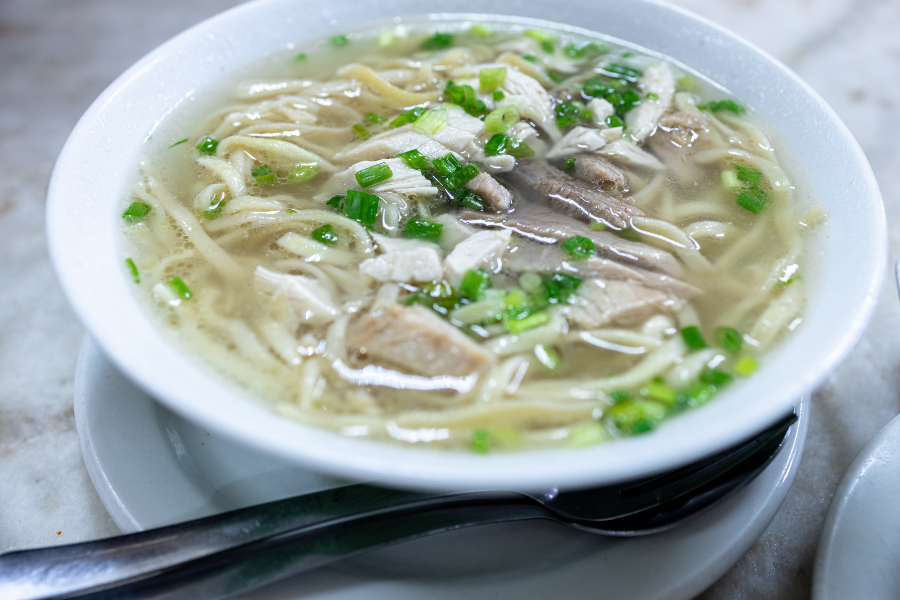
Mami is a noodle soup with egg noodles. Stalls serve it with chicken, beef, or pork. The broth warms you up on rainy days. Add a siopao for a full meal.
What is mami? Mami is a Chinese-Filipino noodle soup.
Pares
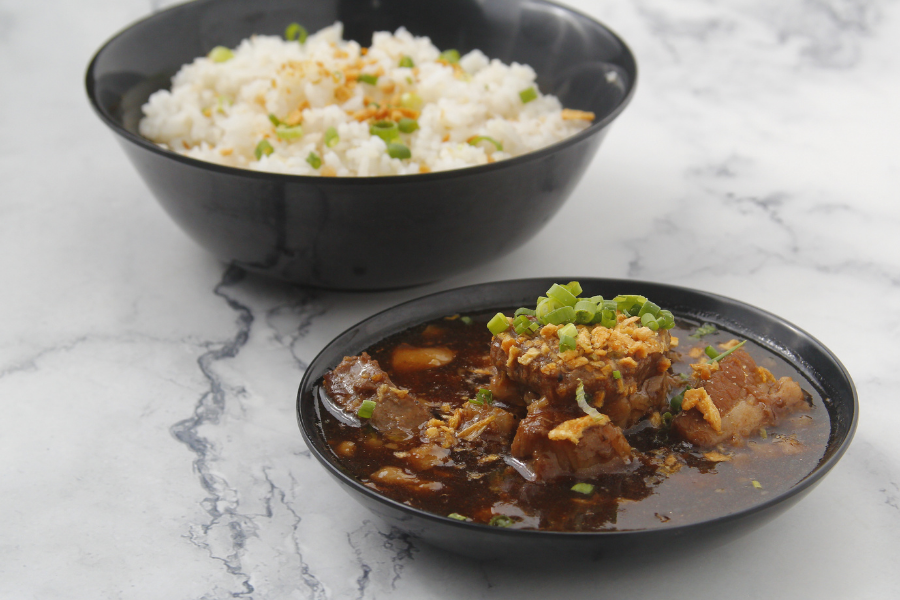
Pares is braised beef with garlic rice and clear soup. Pares means "pairs" in Filipino. The beef comes soft and sweet. Pares stalls stay open late.
Dos Tres: Bopis and Litid
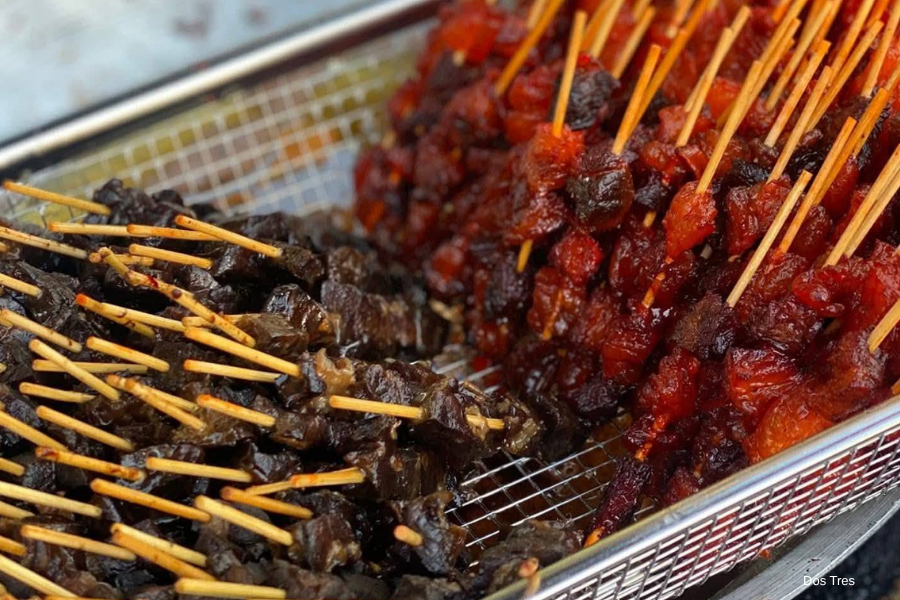
Dos tres is a cheap combo of bopis and litid. Bopis is spicy chopped pork lungs and heart. Litid is beef tendon. Locals eat it with rice or beer.
What is bopis? Bopis is a spicy sauté of pork lungs and heart.
What is litid? Litid is beef tendon. Slow cooking makes it soft and sticky.
Tokwa't Baboy
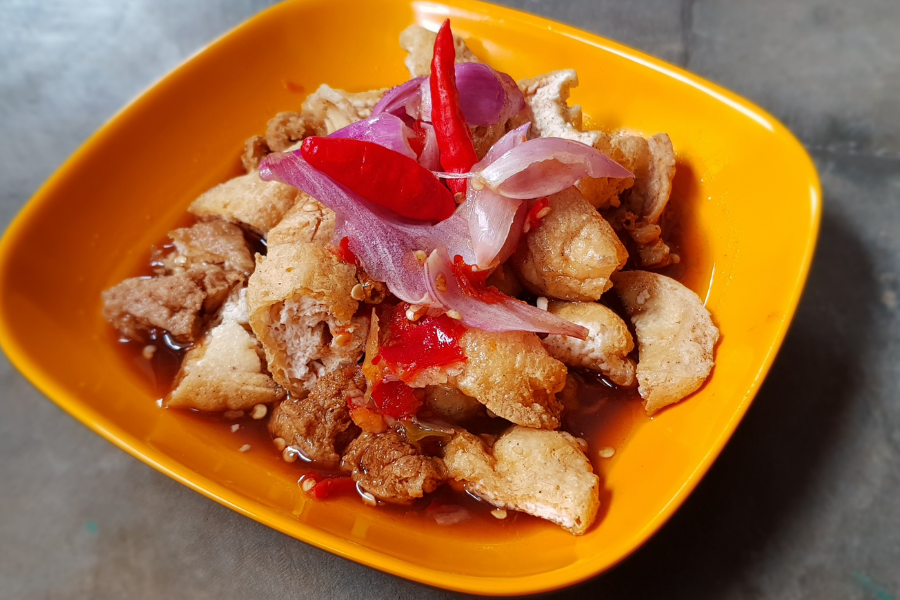
Tokwa't baboy is fried tofu with boiled pork. Stalls toss it in soy sauce, vinegar, and onions. It works as a snack or a side for lugaw. Locals love it as pulutan.
What is pulutan? Pulutan is food Filipinos eat with drinks.
Siomai
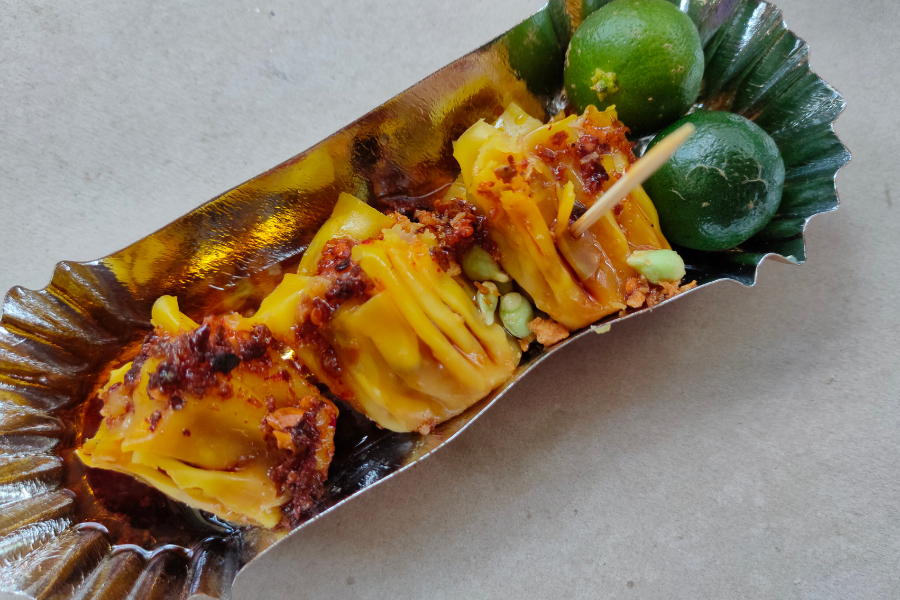
Siomai is a Chinese-style dumpling. Stalls sell it steamed or fried. You'll dip it in soy sauce, calamansi, and chili garlic oil. Siomai rice is a cheap and filling meal.
What is siomai made of? Most siomai uses ground pork. Some versions use shrimp or beef.
Siopao
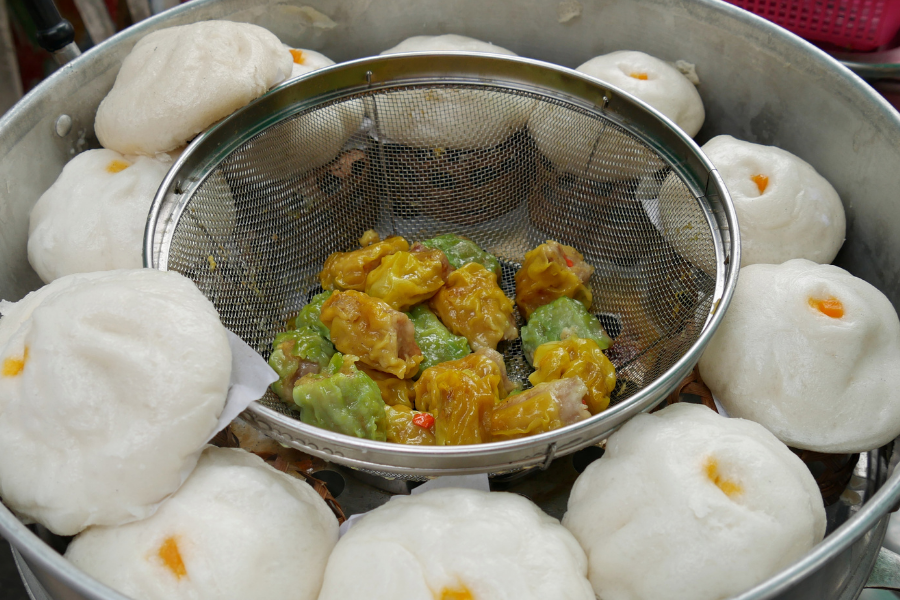
Siopao is a steamed bun with a savory filling. Asado and bola-bola are the two classics. Asado has sweet pork. Bola-bola has a meatball and salted egg.
What sauce goes with siopao? Many stalls give a sweet brown sauce.
Hong Kong Fried Noodles
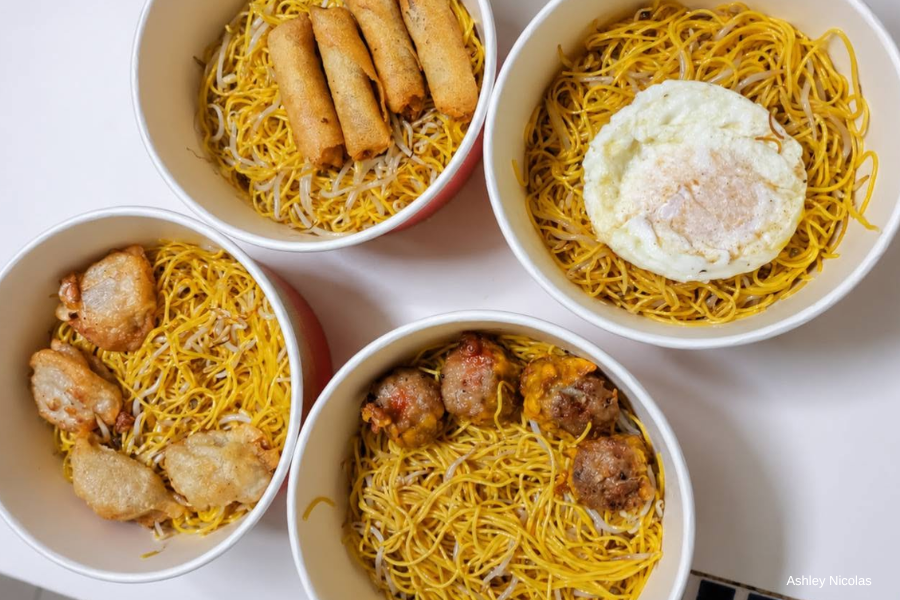
Hong Kong fried noodles are a food cart favorite. Vendors stir-fry egg noodles with sauce. They serve the noodles in a cup. It's an easy snack for walking.
What are Hong Kong fried noodles? They're stir-fried egg noodles from Filipino food carts.
Fresh Lumpia
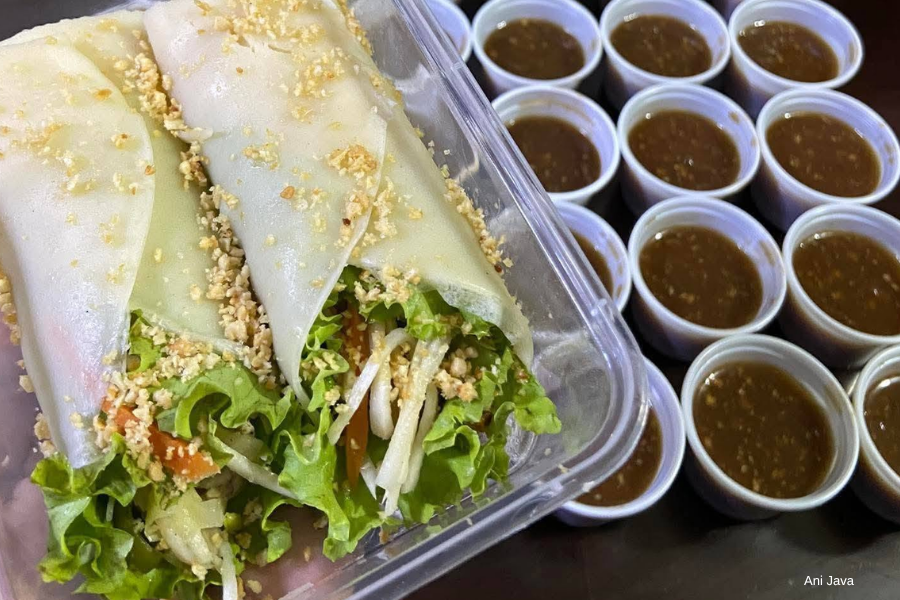
Fresh lumpia is a soft spring roll. A thin crepe holds sautéed vegetables. Cooks add a sweet garlic sauce and crushed peanuts. It's a lighter pick on this list.
What is the difference between fresh lumpia and fried lumpia? Fresh lumpia skips the frying. The wrapper stays soft.
Ilocos Empanada
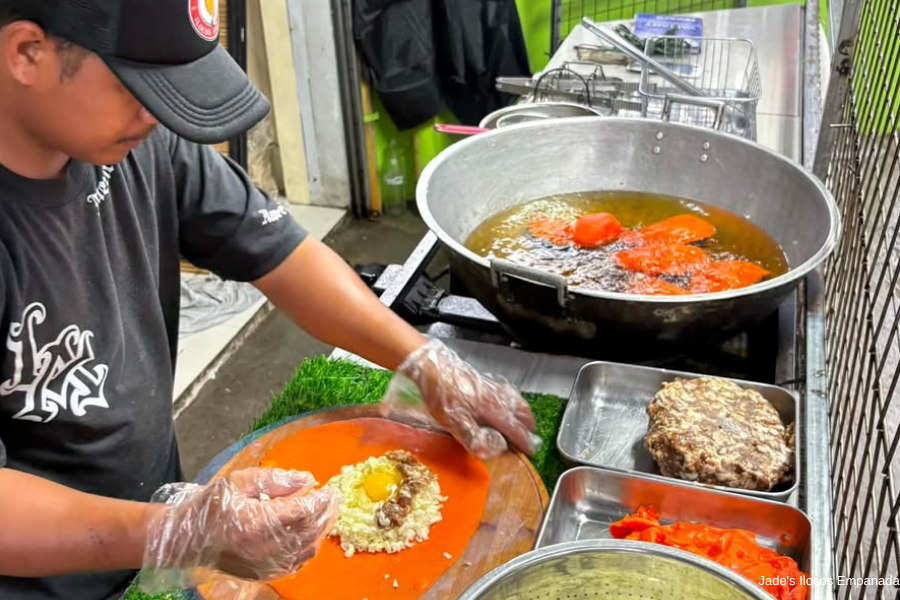
Ilocos empanada is a crispy orange turnover from northern Luzon. It holds green papaya, longganisa, and egg. The shell uses rice flour. Several stalls in Metro Manila sell it.
What is inside Ilocos empanada? It has grated green papaya, Ilocos longganisa, and a whole egg.
What sauce goes with Ilocos empanada? Locals dip it in sukang Iloko. This sugarcane vinegar has a sour kick.
Shawarma
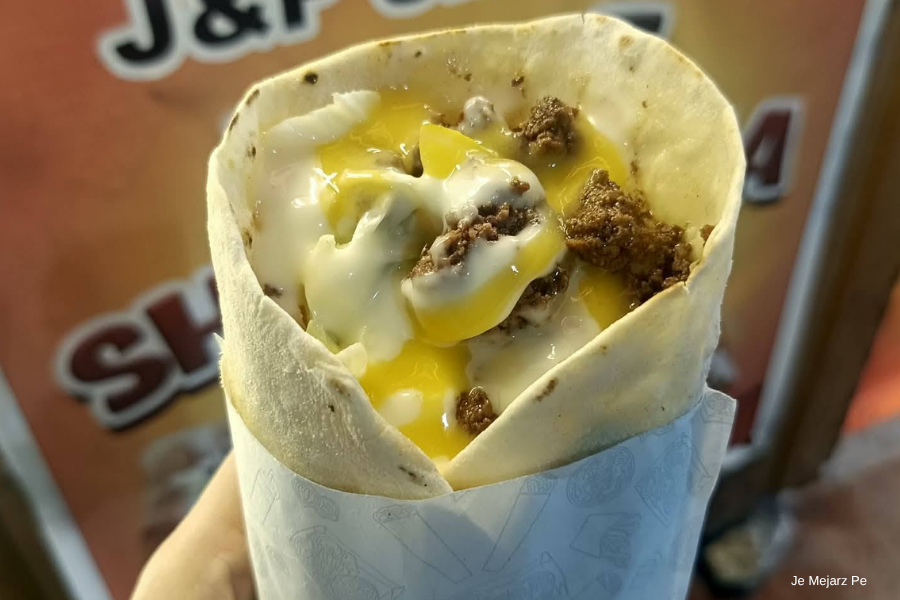
Filipino shawarma is a local twist on the Middle Eastern wrap. Stalls fill pita with beef, veggies, and garlic sauce. Shawarma rice is also popular. Ask for extra cheese or spicy sauce.
How is Filipino shawarma different? Filipino shawarma has a sweeter garlic sauce. Many stalls add cheese.
Pinoy-Style Western Snacks
Flavored French Fries
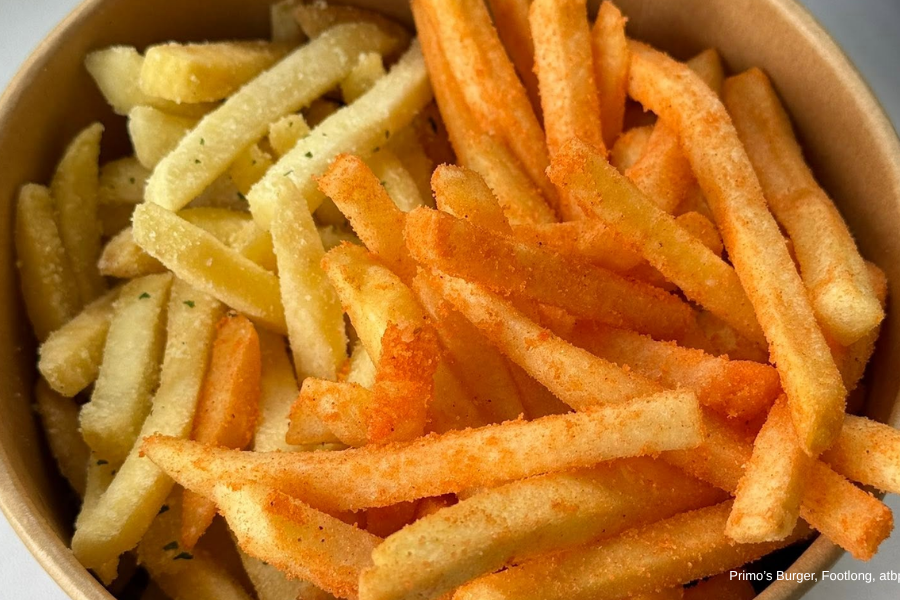
Food carts sell fries with flavored powder. Popular flavors include cheese, sour cream, and barbecue. You'll shake the bag to mix it. It's a mall and street favorite.
What flavors do Filipino fries come in? Cheese, barbecue, and sour cream are the classics.
Hotdog Sandwich
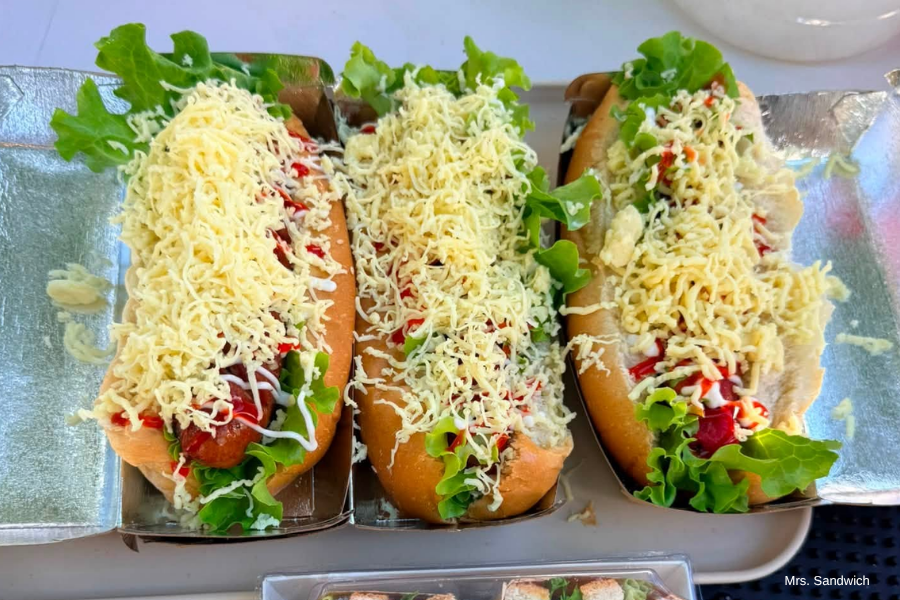
This sandwich uses a red Filipino hotdog. A soft bun holds the sausage with ketchup and mayo. Some stalls add cheese. It's a classic school snack.
What makes the Filipino hotdog sandwich different? The red hotdog tastes sweeter than Western sausages.
Buy 1 Take 1 Burger
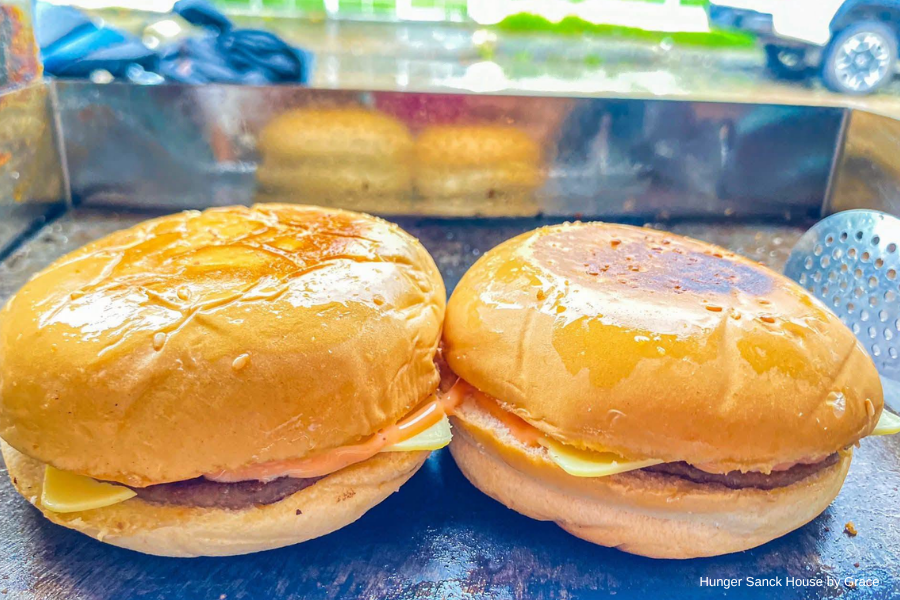
Buy 1 take 1 carts sell two burgers for one price. The patties are small and thin. Vendors add cheese, ketchup, and mayo. It's a budget snack after work.
What does buy 1 take 1 mean? You pay for one burger. You get a second one free.
Footlong
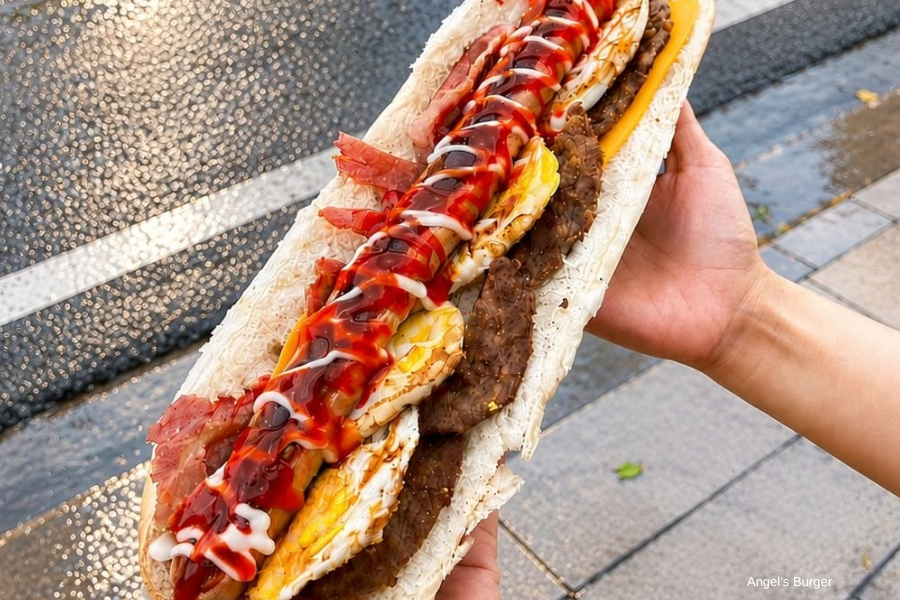
Footlong is a long hotdog in a bun. Carts top it with cheese, ketchup, and onions. It fills you up for a small price. Kids love it.
Is footlong a Filipino food? The idea came from American hot dogs. Filipinos made it a street staple.
Nachos
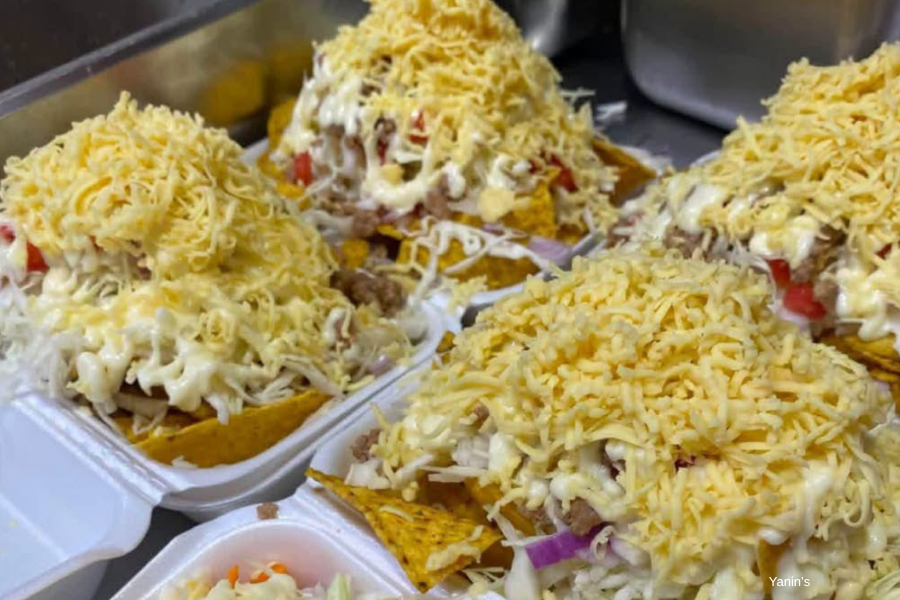
Street nachos come in a cup or small tray. Vendors top chips with cheese sauce, ground meat, and veggies. The sauce tastes sweet and mild. It's a fun snack to share.
What goes on Filipino street nachos? Most carts use chips, cheese sauce, ground meat, tomatoes, and onions.
Pinoy Pizza
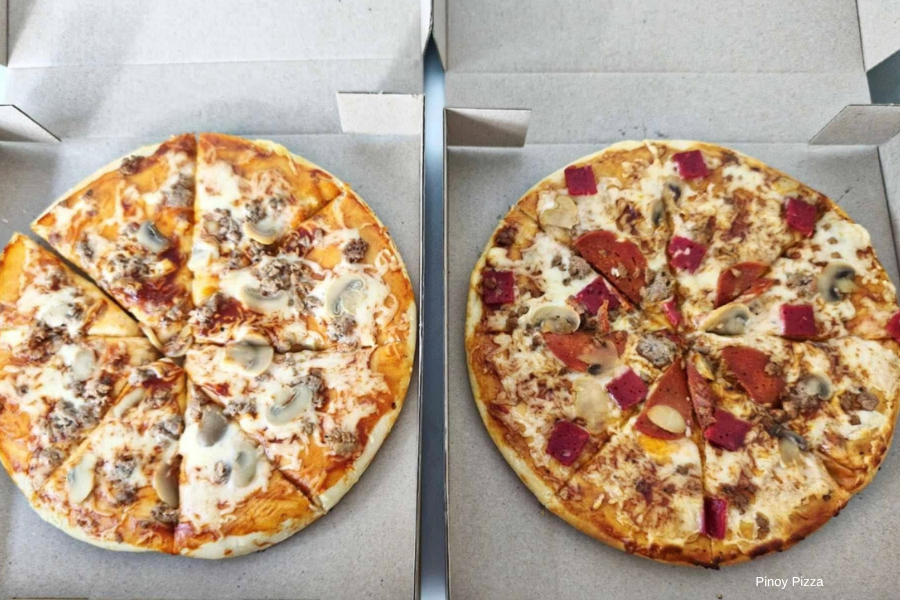
Pinoy pizza is a small, cheap pizza. The sauce leans sweet. Toppings include ham, hotdog, and cheese. You'll find it in carts and small bakeries.
Why is Pinoy pizza sweet? Filipino cooks add sugar to the tomato sauce.
Street Pancake
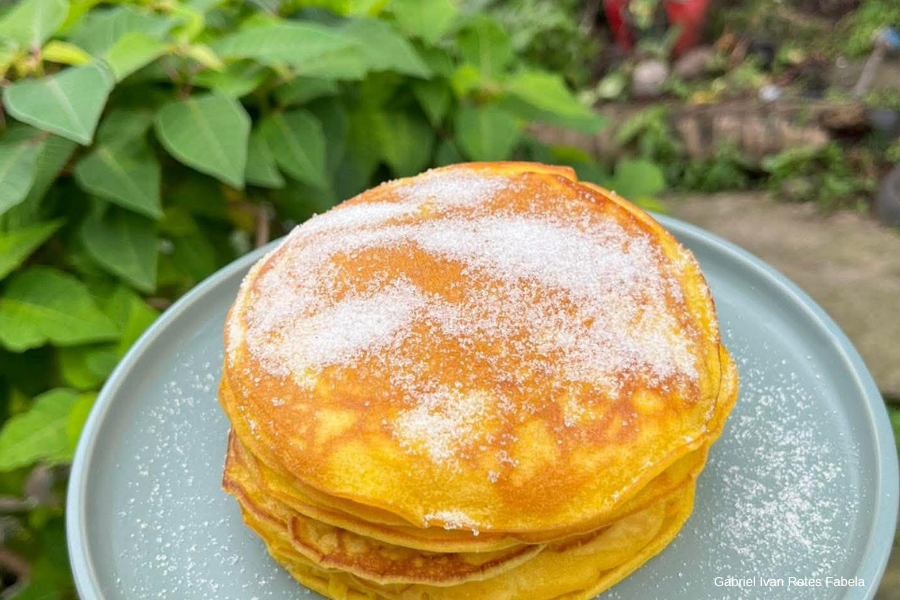
Street pancakes are thin and soft. Vendors spread margarine and sugar on top. They fold each one into wax paper. Kids buy them outside schools.
What goes on a Filipino street pancake? Margarine and white sugar are the classic toppings. Some stalls add syrup or cheese.
Japanese Pancake
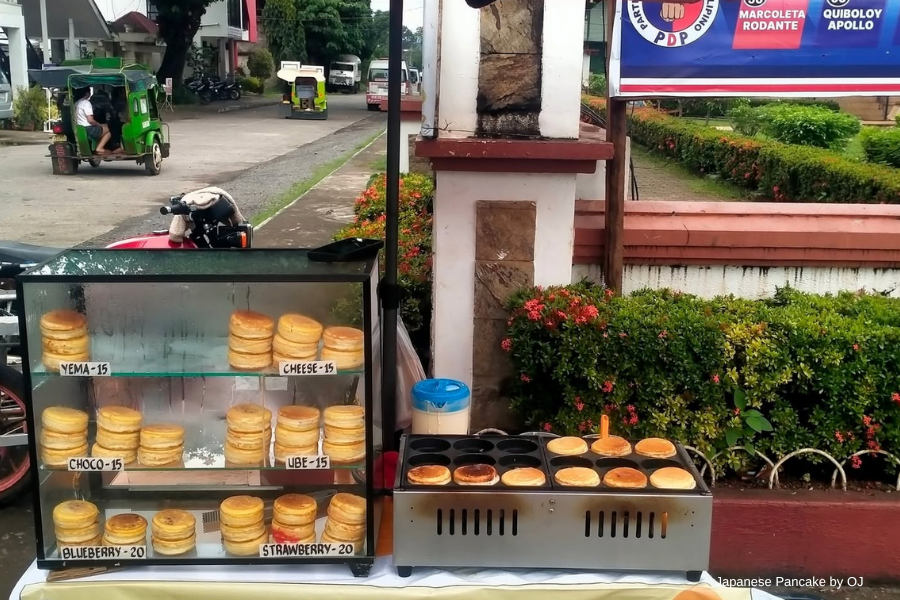
Japanese pancake is a round, filled cake. Vendors cook it in a special mold. Fillings include cheese, chocolate, and custard. Filipinos also call it Japanese cake.
What is Japanese pancake in the Philippines? It's the local version of imagawayaki.
Sweet Merienda
Banana Cue
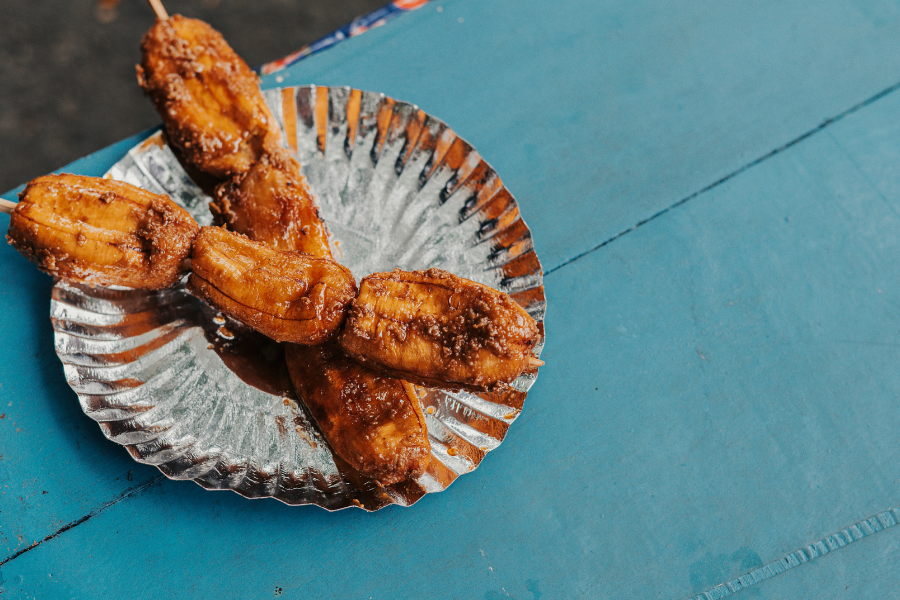
Banana cue belongs in every Filipino food beginners guide. Vendors fry saba bananas in brown sugar. The sugar coating turns crunchy. Each stick holds two or three bananas.
What is banana cue? Banana cue is fried saba banana coated in caramelized brown sugar.
What is saba? Saba is a Filipino cooking banana. It's firmer and less sweet than regular bananas.
Camote Cue
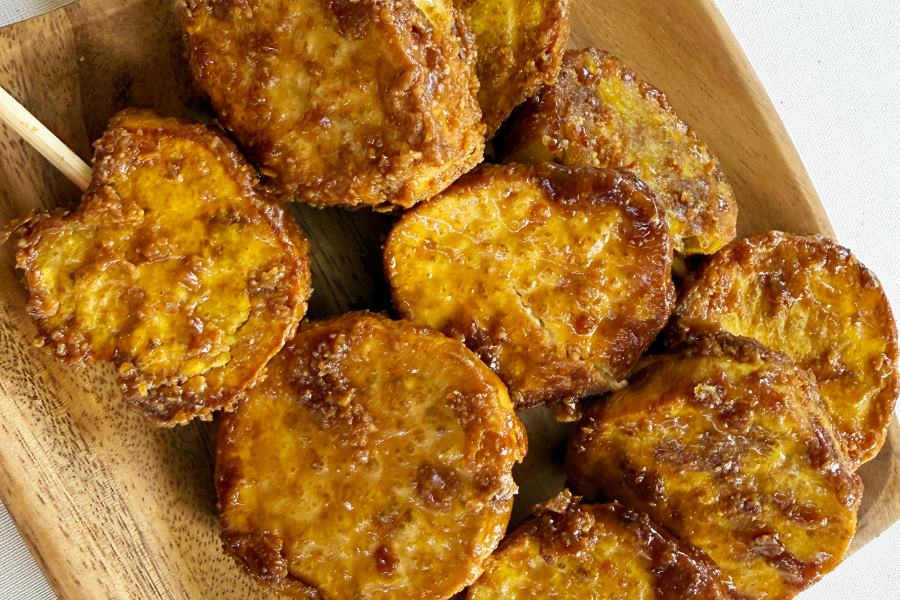
Camote cue uses sweet potato instead of banana. Vendors fry the slices in brown sugar. The outside turns crisp. The inside stays soft.
What is camote? Camote means sweet potato in Filipino.
Turon
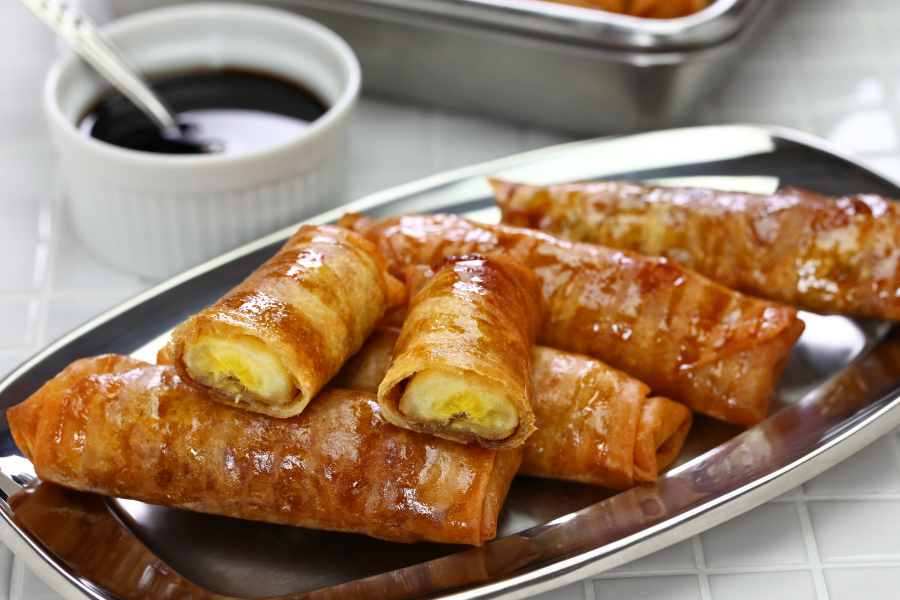
Turon is a classic Philippine street food dessert. The spring roll holds saba banana and sometimes jackfruit. The wrapper gets a caramelized sugar coat. You'll hear the crunch with every bite.
What is turon? Turon is banana in a lumpia wrapper, fried with brown sugar.
What is the difference between turon and banana cue? Turon comes in a wrapper. Banana cue comes as whole bananas on a stick.
Maruya
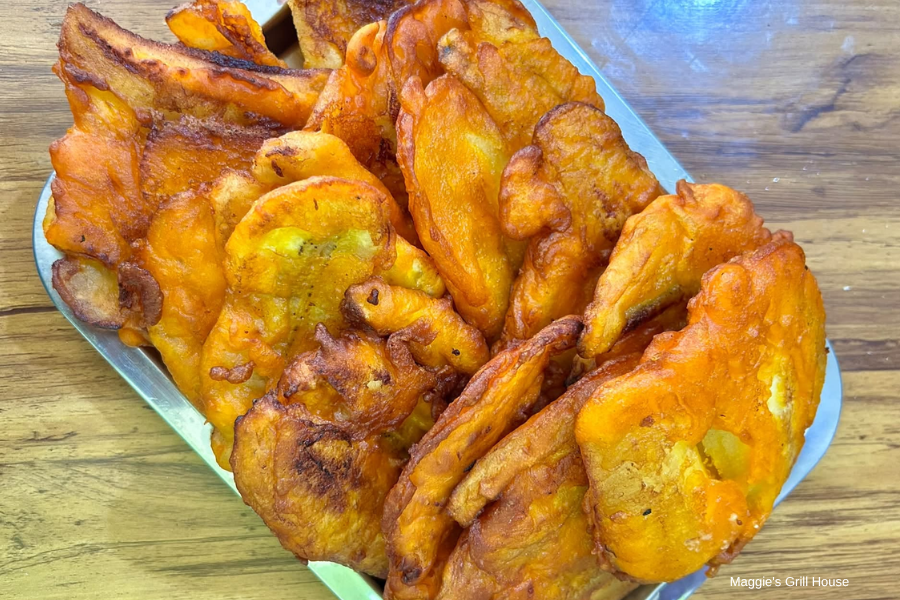
Maruya is a banana fritter. Cooks fan out thin slices of saba. They fry the slices in batter. A sprinkle of sugar finishes it.
Carioca
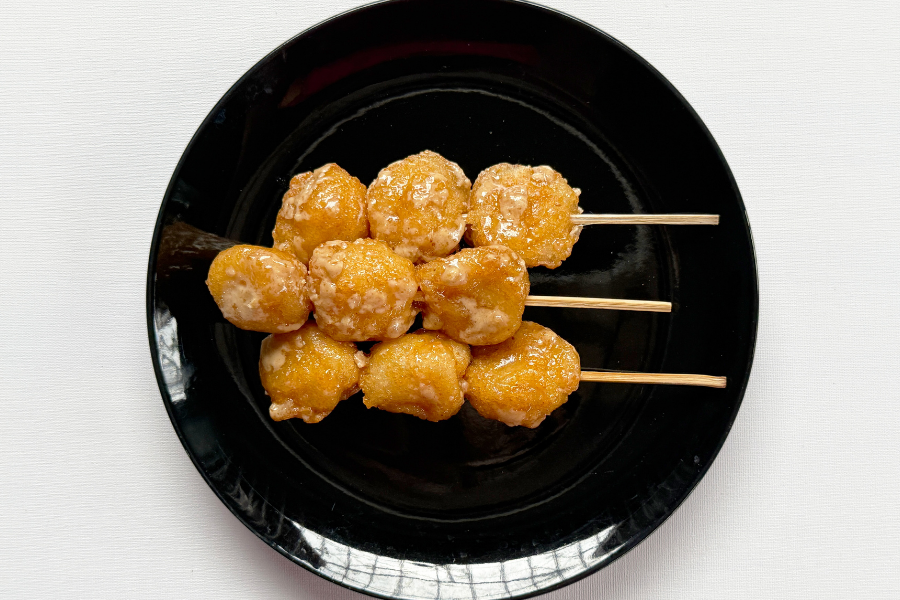
Carioca is fried glutinous rice balls. Vendors skewer three or four balls on a stick. A sticky caramel glaze coats each one. The inside feels chewy.
What is carioca made of? Carioca uses glutinous rice flour, coconut, and brown sugar.
Bibingka
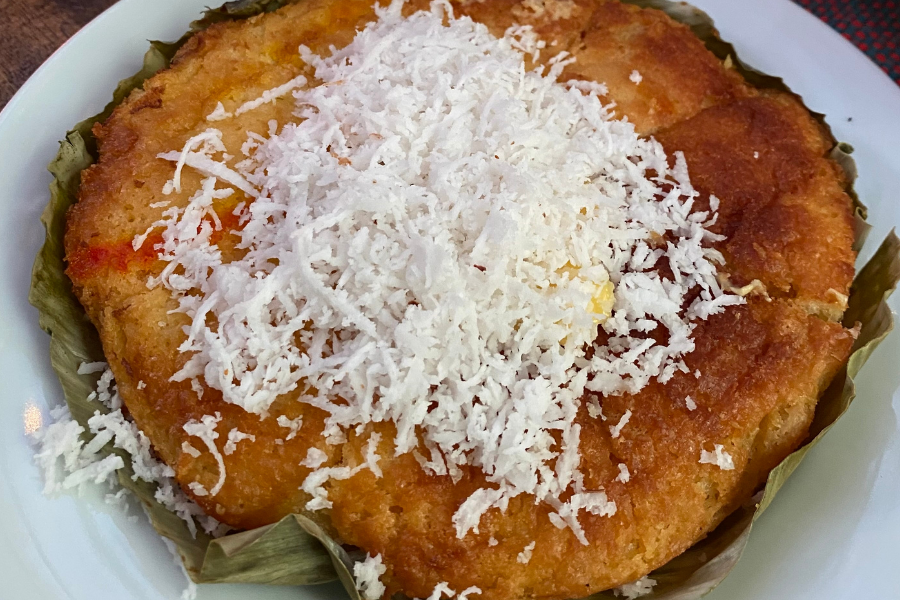
Bibingka is a soft rice cake. Cooks bake it in clay pots lined with banana leaves. Toppings include salted egg, cheese, and grated coconut. You'll find it outside churches at Christmas.
When is bibingka in season? Bibingka peaks during Simbang Gabi in December. Simbang Gabi is the series of dawn masses before Christmas.
Puto Bumbong
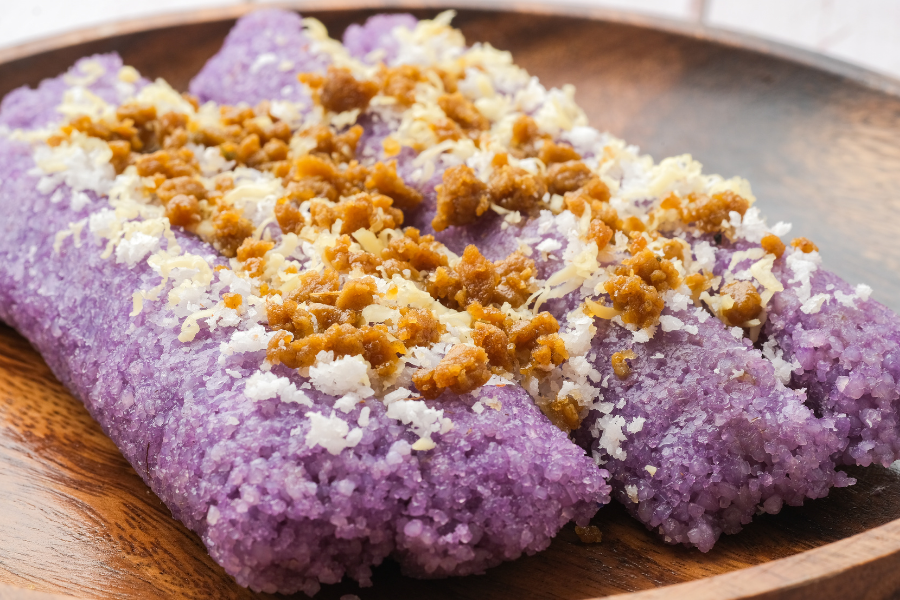
Puto bumbong is purple sticky rice. Cooks steam it inside bamboo tubes. They top it with margarine, muscovado sugar, and grated coconut. It pairs well with bibingka.
Why is puto bumbong purple? Traditional cooks use pirurutong, a purple heirloom rice. Many modern versions use ube coloring.
Puto
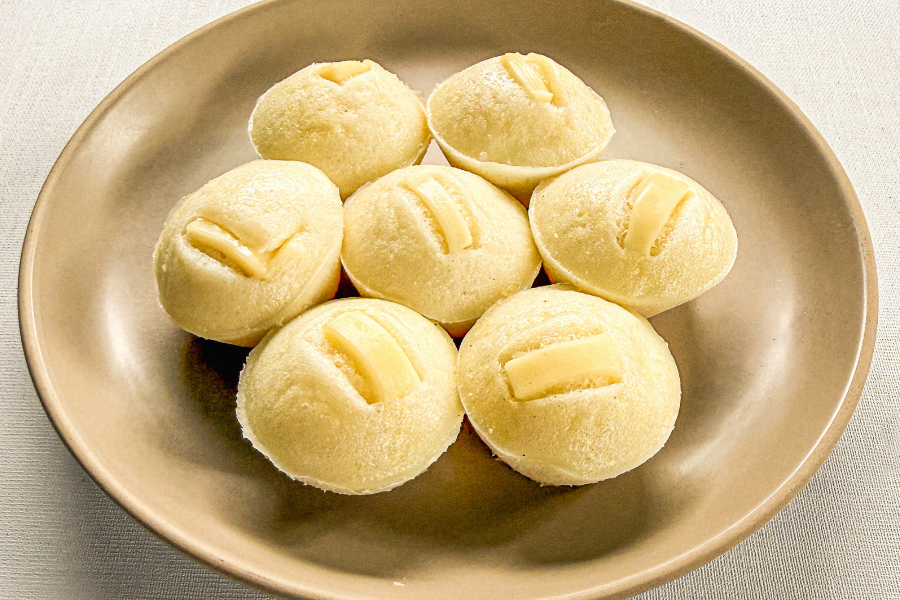
Puto is a small steamed rice cake. It comes plain or with cheese on top. Some versions use ube or pandan. Locals pair it with dinuguan.
What does puto taste like? Puto tastes soft, light, and a bit sweet.
Kutsinta
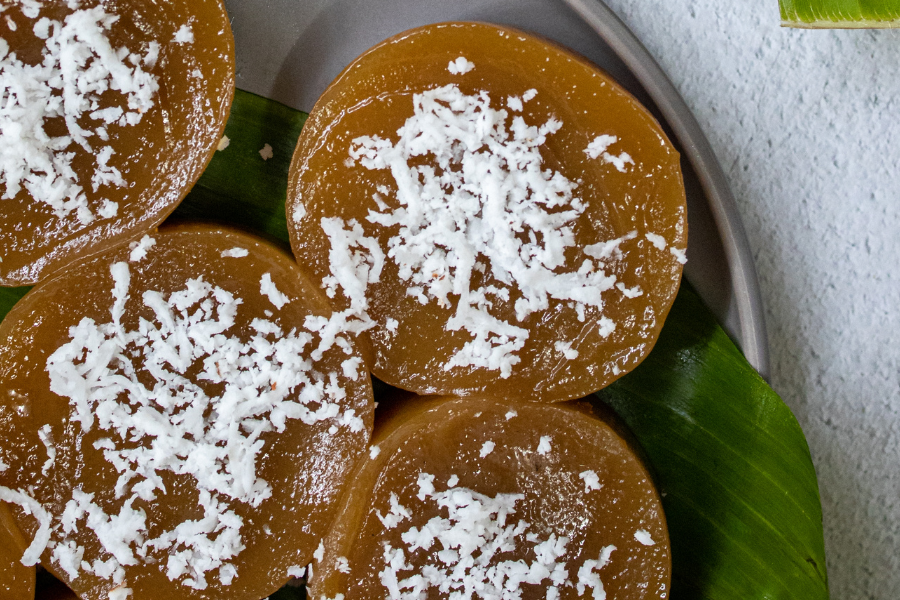
Kutsinta is a brown steamed rice cake. It has a chewy, jelly-like texture. Vendors top it with grated coconut. It sits beside puto on most trays.
What gives kutsinta its texture? Lye water gives kutsinta its bouncy chew.
Biko
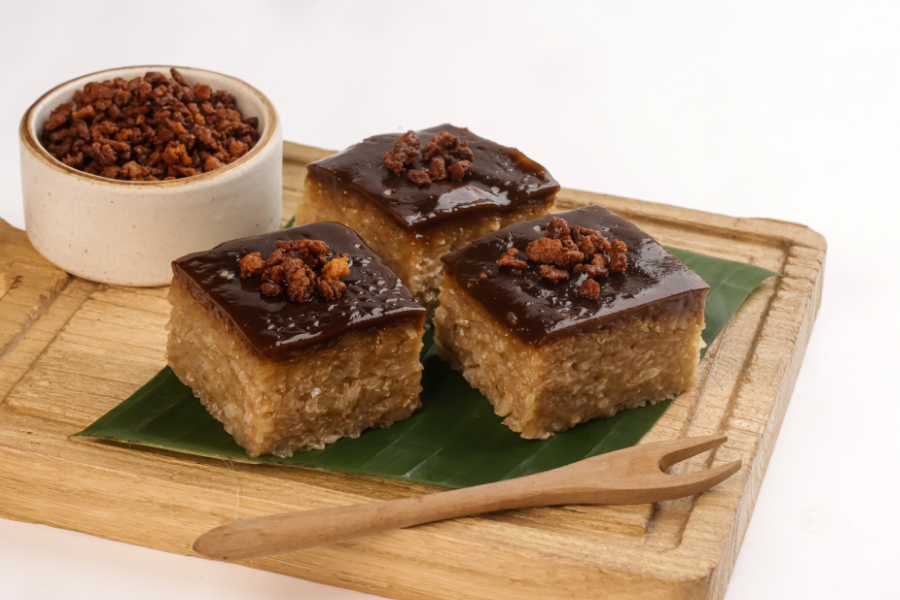
Biko is sticky rice in coconut milk and brown sugar. Cooks top it with latik. Latik is toasted coconut curds. Each order comes as a rich, sweet square.
What is latik? Latik is the golden curd from cooked coconut milk.
Tupig
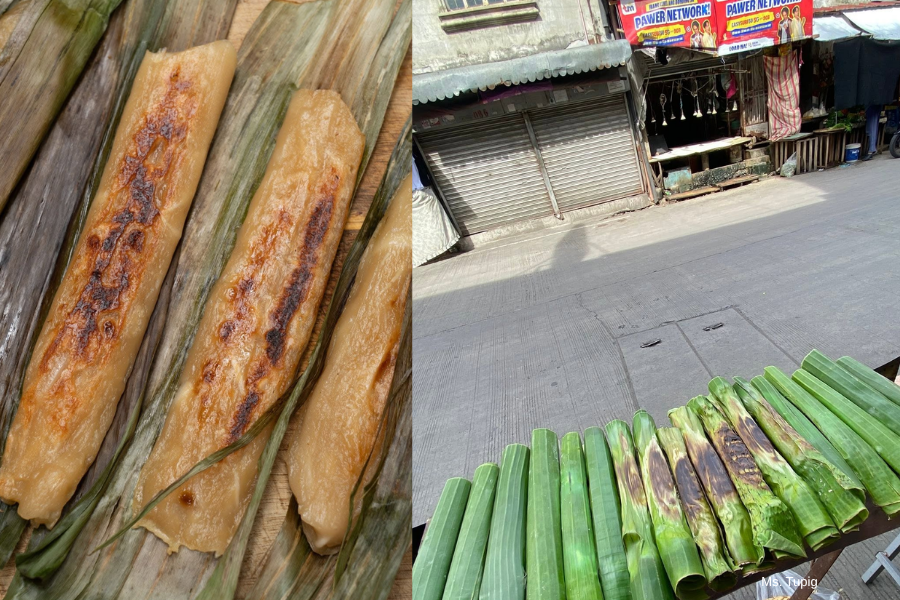
Tupig is grilled sticky rice in banana leaf. It comes from Pangasinan and the Ilocos region. The rice mixes with coconut and sugar. The grill adds a smoky smell.
What is tupig made of? Tupig uses glutinous rice, coconut milk, grated coconut, and sugar.
Hopia
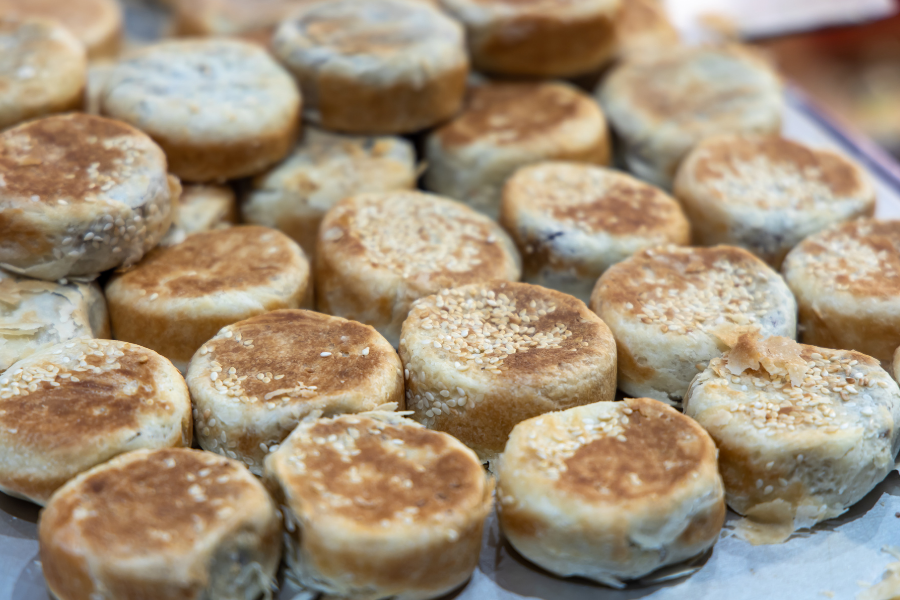
Hopia is a flaky pastry with a sweet filling. Mung bean is the classic filling. Ube hopia is also popular. It makes good pasalubong.
What is pasalubong? Pasalubong is a gift from a trip for family and friends.
Pandesal
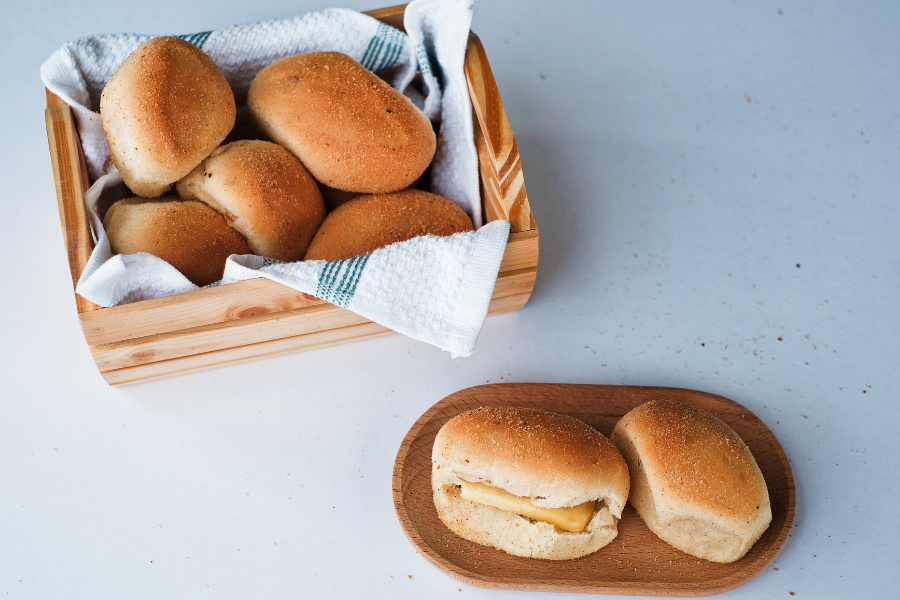
Pandesal is the Filipino breakfast bread. Bakeries sell it hot every morning. The rolls taste soft and a little sweet. Pair it with coffee or cheese.
When should you buy pandesal? Early morning is the best time. The first batch comes out warm.
Drinks and Cold Treats
Buko Juice
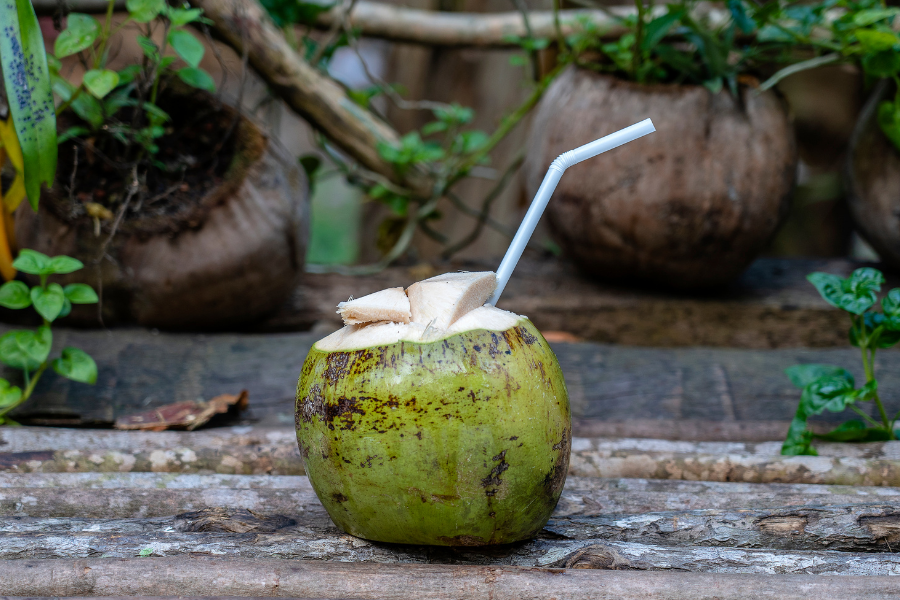
Buko juice is fresh young coconut water. Vendors crack the coconut in front of you. You can sip the juice straight from the shell. Ask for the soft meat too.
Sago't Gulaman
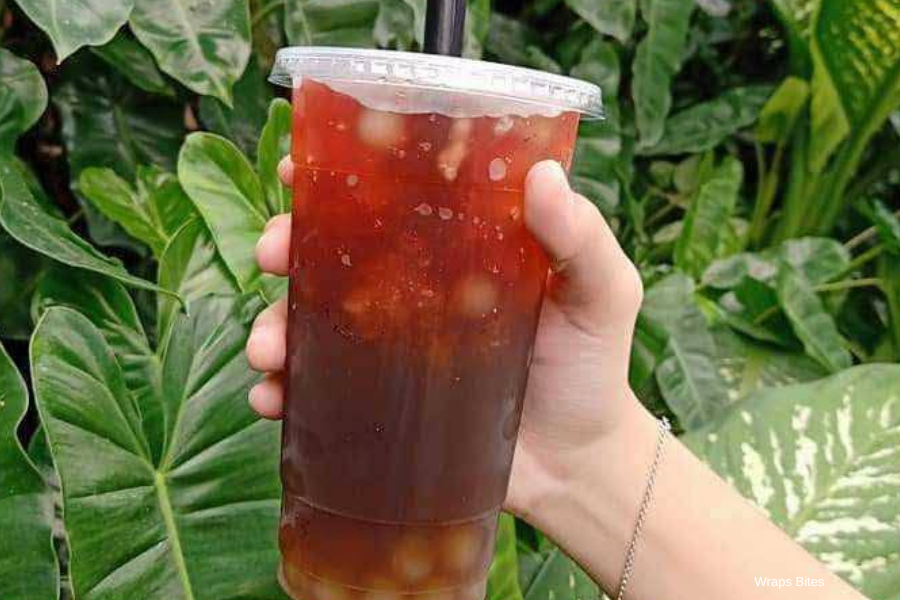
Sago't gulaman is a sweet cold drink. It has tapioca pearls and jelly cubes. Brown sugar syrup adds the flavor. It's perfect on a hot day.
What is gulaman? Gulaman is a jelly made from seaweed.
Halo-Halo
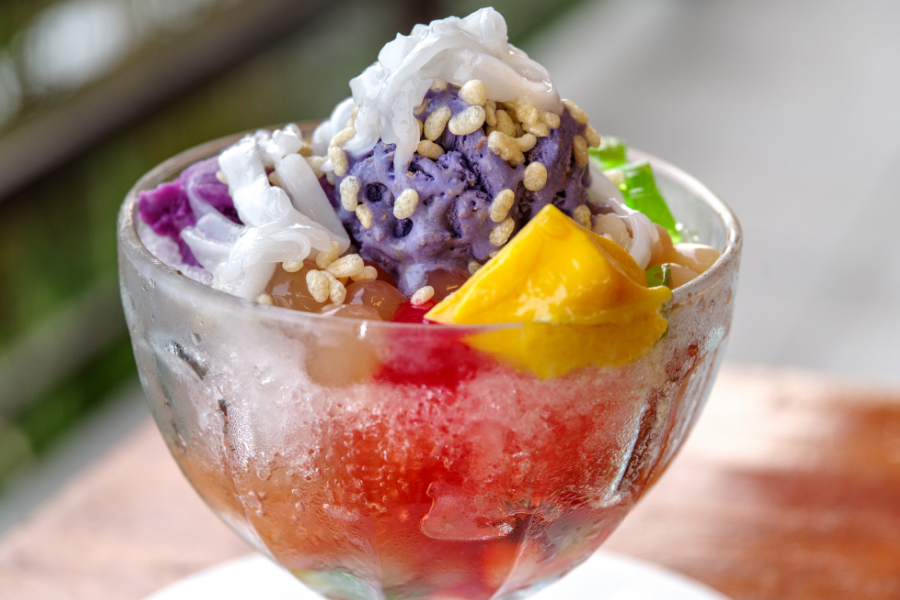
Halo-halo is a must-try food in the Philippines. The name means "mix-mix" in Filipino. It layers shaved ice, milk, sweet beans, fruits, and jellies. You'll mix it all before eating.
What is in halo-halo? Common ingredients include sweet beans, saba, nata de coco, kaong, leche flan, ube, and ice cream.
Ice Candy
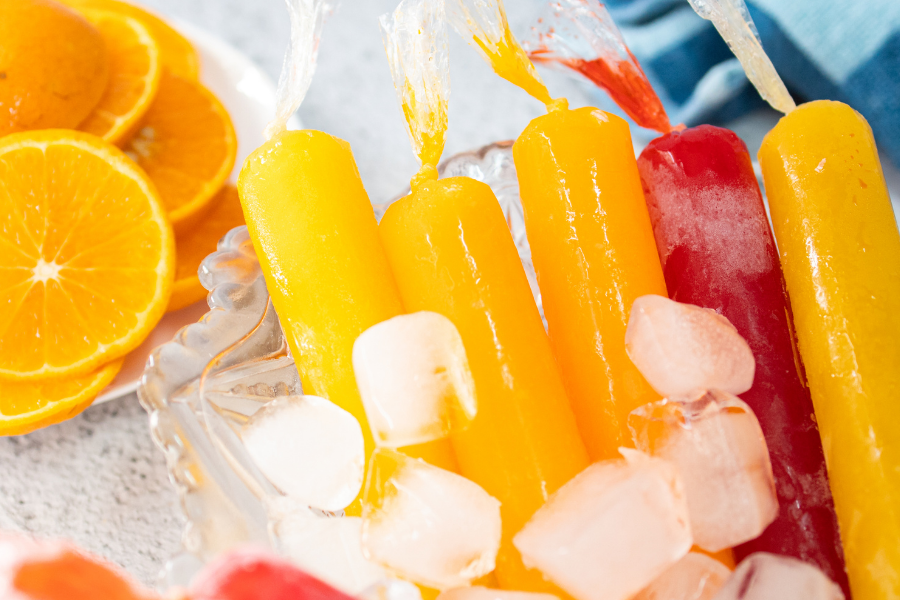
Ice candy is frozen juice or milk in a thin plastic tube. Neighborhood stores sell it for a few pesos. Popular flavors include mango, buko, and chocolate. Bite off the corner of the plastic.
Is ice candy safe to eat? Buy it from clean stores. Ask whether the maker uses purified water.
Scramble
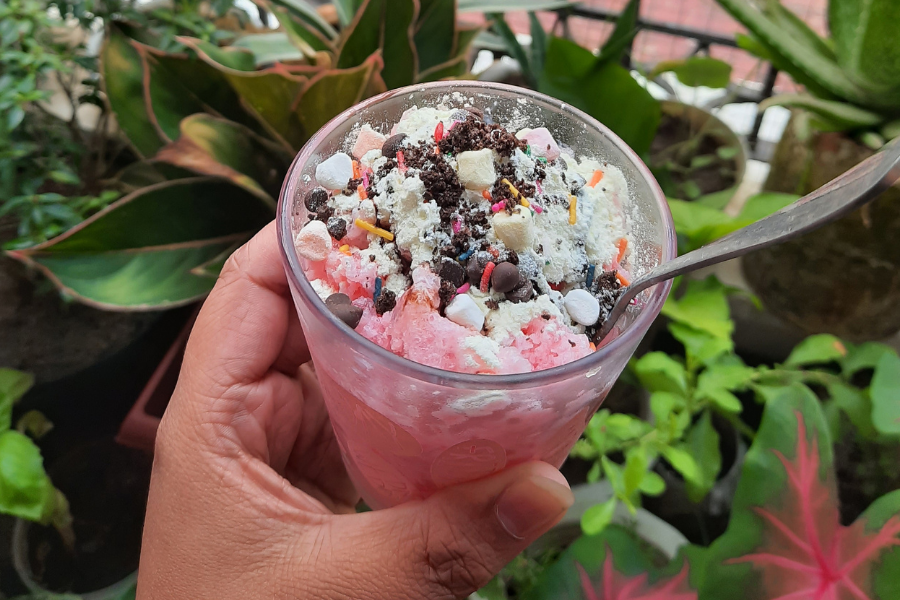
Scramble is a sweet shaved ice treat. Vendors mix it with milk and pink syrup. They top it with chocolate syrup and powdered milk. School kids love it.
What is scramble made of? Scramble uses shaved ice, evaporated milk, sugar, and food coloring.
Nilalako (Street Food That Comes to You)
Taho
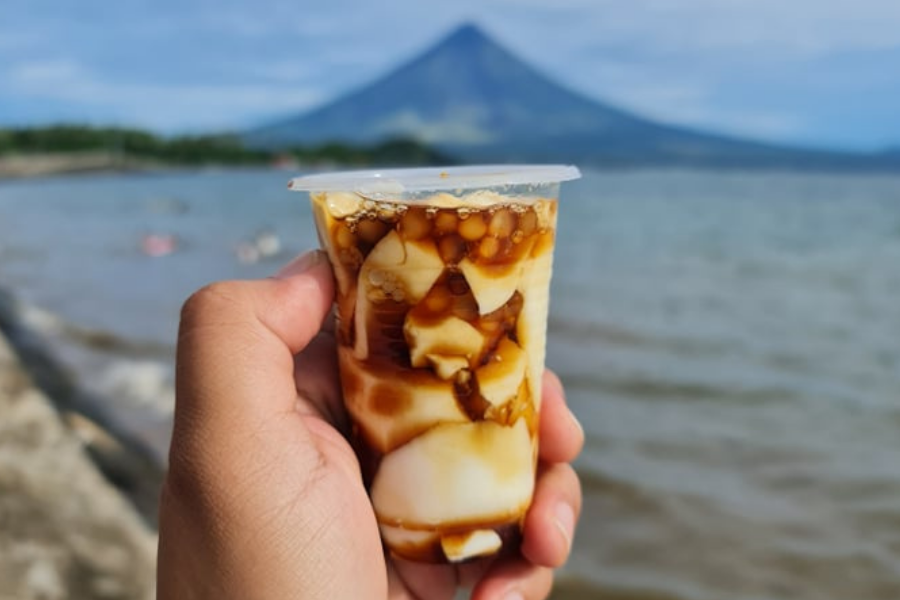
Taho is soft tofu with brown sugar syrup and sago pearls. Vendors carry two big buckets on a pole. You'll hear them call "Tahooo" in the morning. Bring your own cup when you can.
What is taho made of? Taho uses silken tofu, arnibal, and sago. Arnibal is brown sugar syrup.
When can you buy taho? Most vendors sell taho early in the morning.
Sorbetes: Dirty Ice Cream
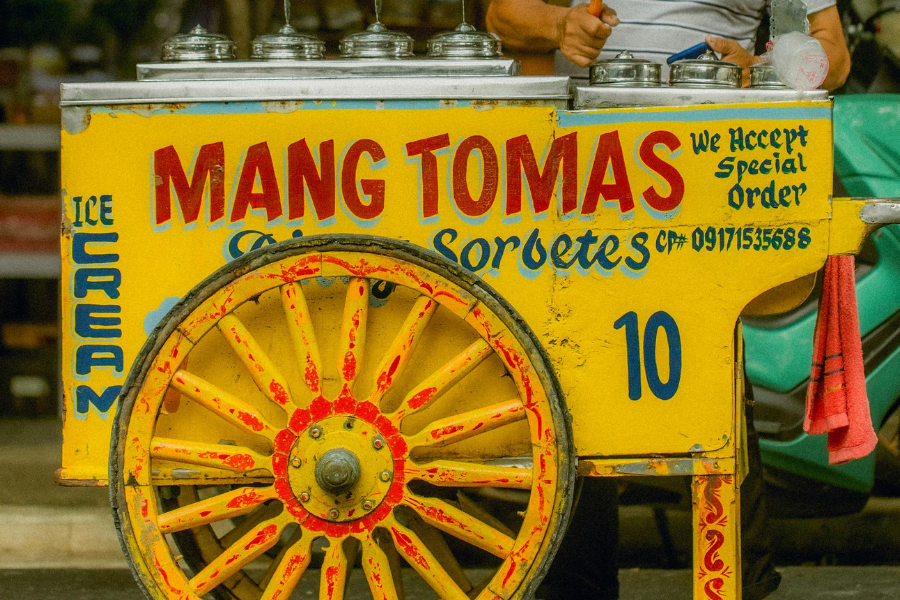
Sorbetes is Filipino street ice cream. Locals call it dirty ice cream as a joke. Vendors push colorful carts with bells. You can get it in a cone or a bread bun.
Why is it called dirty ice cream? Locals gave it the nickname for its street origin.
What flavors does sorbetes have? Classic flavors include ube, cheese, chocolate, and mango.
Balut
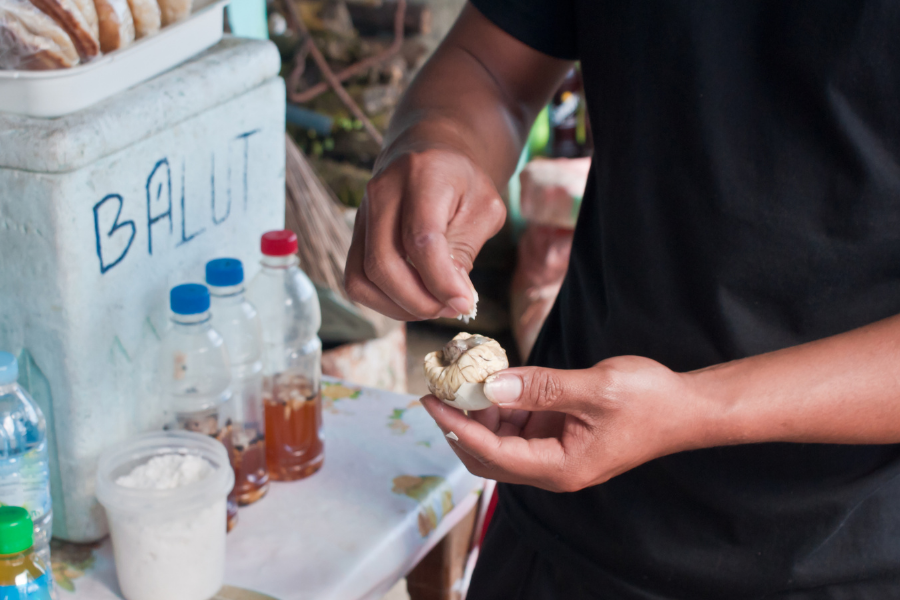
Balut is a boiled fertilized duck egg. It's the most famous Filipino food for foreigners to try. Vendors sell it warm at night. Listen for the call of "Baluuut" after dark.
What is balut? Balut is a duck egg with a developing embryo inside.
How is balut eaten? Tap a small hole on the wide end. Sip the broth first. Peel the shell next. Add salt or vinegar.
How much is balut? Prices vary by area. Expect to pay a few dozen pesos per egg.
Penoy
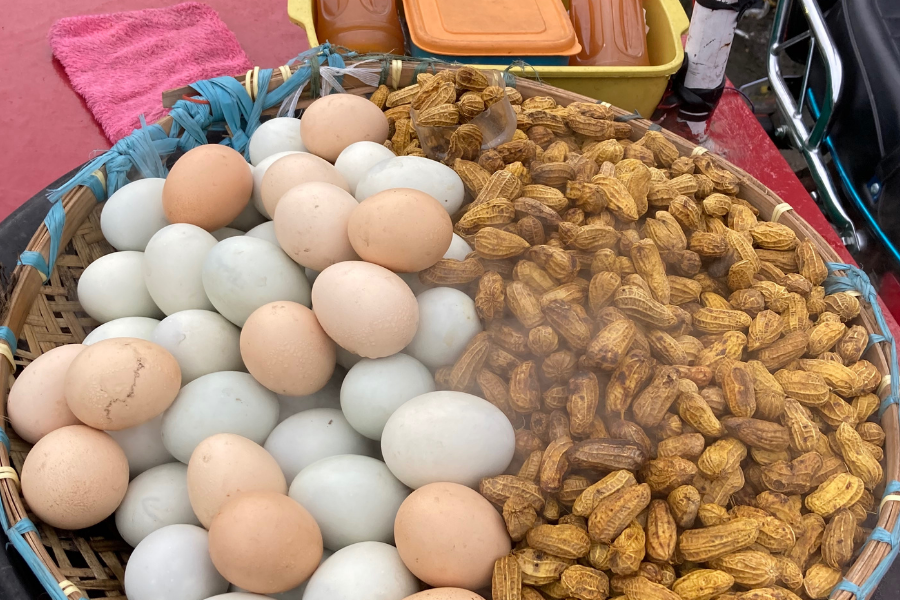
Penoy is an unfertilized duck egg. It looks like a regular hard-boiled egg. Balut vendors carry both. Penoy is a good first step for beginners.
What is the difference between balut and penoy? Balut has an embryo. Penoy has only yolk and white.
Binatog
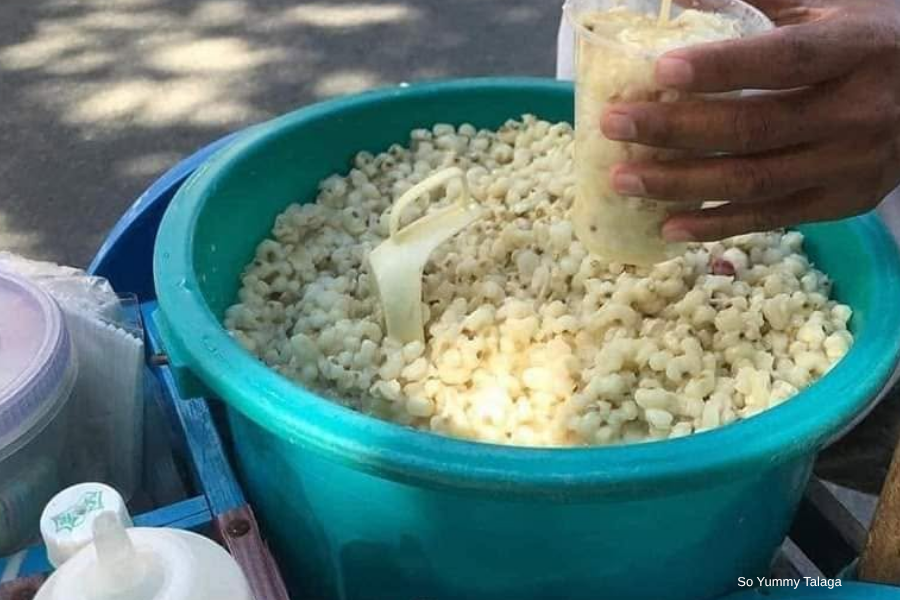
Binatog is boiled white corn kernels. Vendors top it with grated coconut. You can add salt or sugar. Some vendors ride bikes and honk a horn.
What is binatog made of? Binatog uses white corn, grated coconut, and salt or sugar.
Boiled Corn
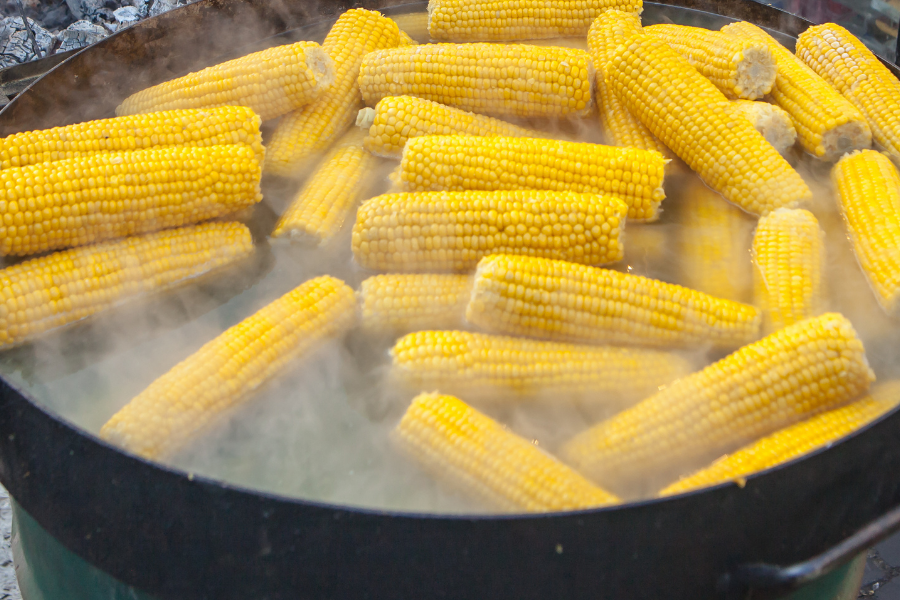
Boiled corn is a simple street snack. Vendors sell whole cobs from a steaming pot. Some add butter and salt. It's warm and filling.
What corn do vendors sell? Many sell sweet yellow corn. Others sell sticky white corn.
Green Mango and Singkamas with Bagoong
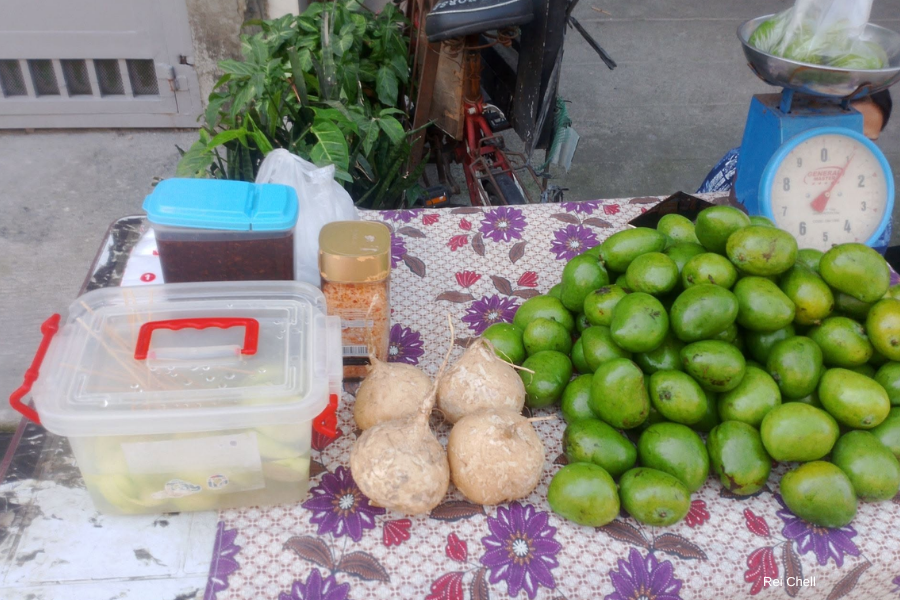
Fruit vendors sell sliced green mango and singkamas. Singkamas is jicama. Both come with bagoong on the side. The sweet and salty combo is addictive.
What is bagoong? Bagoong is fermented shrimp paste. The sweet version pairs best with fruit.
Fresh Fruits
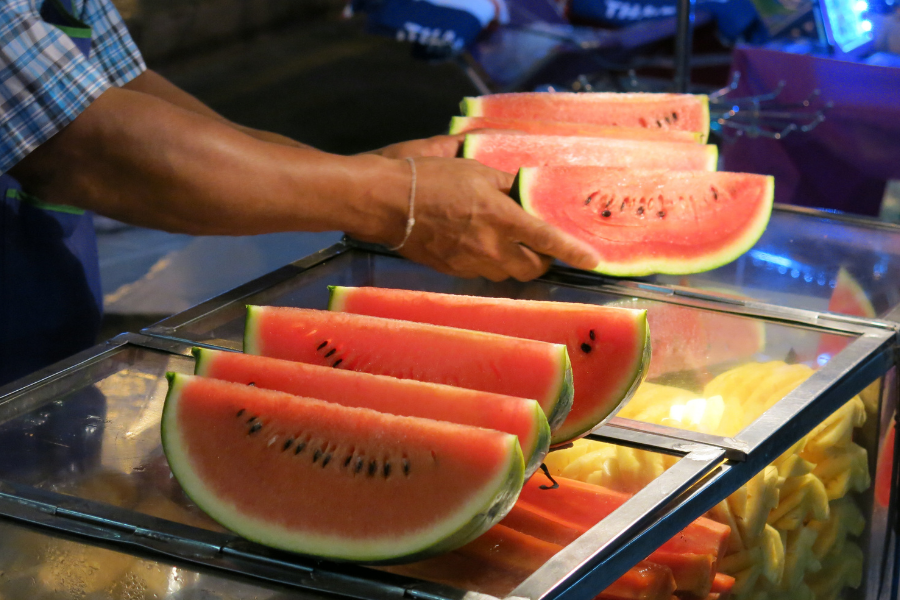
Fruit carts sell pineapple, watermelon, and mango on sticks. Some carts sell ripe mango in cups. It's a refreshing break from fried food. You'll find them near schools and markets.
Is street fruit safe to eat? Pick fruits with thick peels. Choose carts that keep the fruit covered.FAQ: Filipino Street Food Safety Precautions for Tourists
Frequently Asked Questions
Is Filipino street food safe to eat? Most street food is safe with smart choices. Pick busy stalls with fast turnover. Choose food cooked fresh in front of you.
How do I avoid an upset stomach? Start with small portions. Eat grilled and fried food while hot. Skip raw toppings on your first few days. Pack oral rehydration salts in your bag.
Is the water and ice safe? Drink bottled or purified water. Many vendors buy ice from commercial suppliers. Ask the vendor about their ice.
Should I share sauce jars? Many stalls now use small cups or squeeze bottles. Ask for your own cup. Pour the sauce instead of dipping.
What should I bring on a street food trip? Bring small bills and coins. Pack wet wipes and alcohol spray. Carry a small bag for trash.
How much money do I need? Most skewers and snacks cost under 50 pesos each. Bring 300 to 500 pesos for a full street food crawl.
What time is best for street food? Mornings bring taho and pandesal. Afternoons bring banana cue and merienda carts. Evenings bring grills and balut vendors.
I have food allergies. What should I watch for? Many dishes use shrimp, peanuts, and eggs. Tell the vendor about your allergy. Carry your medicine at all times.
Filipino street food gives you a real taste of local life. Each stick shows how Filipinos cook with every part of the animal. Start with banana cue or fish balls on day one. Work your way up to isaw and balut. Your Philippine food bucket list will fill up fast.
Bring cash, wet wipes, and a big appetite. Ask the vendors for their best sellers. You'll leave with a full stomach and great stories. Did I miss your favorite street food? Comment down below!
